Cost guide / Layton & Utah
What does a new roof cost in Utah?
Compare roof replacement budgets using the actual roof area, material and work included. Published national examples can start the planning; a local proposal needs a defined scope.
Published Updated onPublished by Layton Roofers
On this pageShow contentsHide contents
Published cost context, with the scope attached.
For national context, Verisk's 2026 report says residential roof replacement costs averaged $17,631 in 2025. The public insurance/property-analytics release does not standardize roof size, material or included work for that average. It is not a Utah quote or a price per square foot.[1]
| Published example | Reported cost | Scope and limit |
|---|---|---|
| Verisk, 2025 residential replacement average | $17,631 | U.S. aggregate, no common roof area or material specified in the public release. |
| JLC, 2025 asphalt replacement model | $31,871 | 30 roofing squares, tear-off to sheathing, specified underlayment/edge/flashing and two skylight details. |
| JLC, 2025 standing-seam model | $51,865 | 3,000 square feet of prefinished standing seam with specified membrane, underlayment and accessories. |
JLC's figures are national modeled projects, with rectangular hip-roof, skylight and ridge assumptions. The assemblies are different; their difference is not a universal metal surcharge.[2][3][4]
These are different datasets, not a price range for your roof. Do not combine them into an advertised Utah low/high estimate. The scope, date, market and actual condition must travel with any comparison. JLC describes a cost-modeling methodology rather than a set of matched homeowner bids.[5]
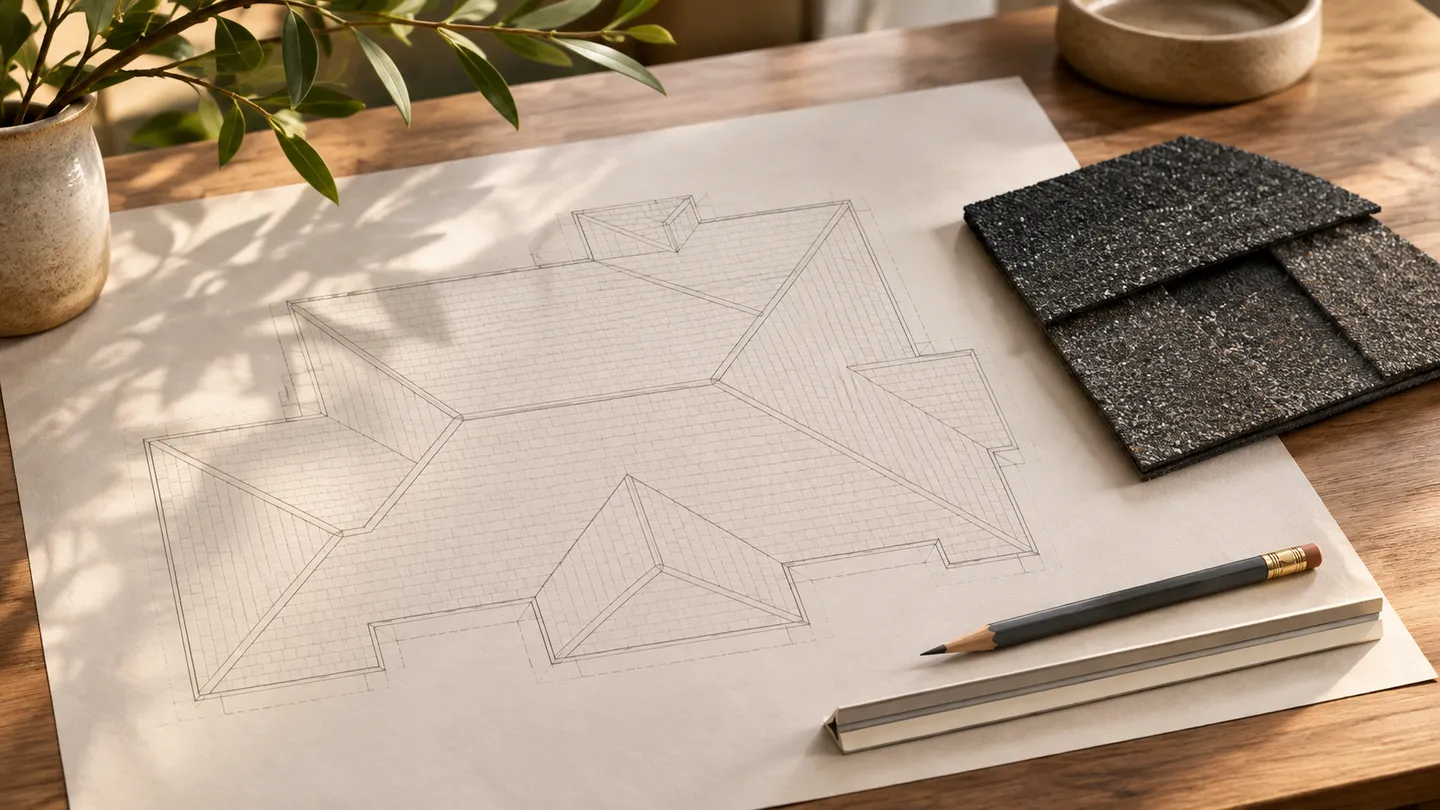
Roof area is not home floor area.

The roof’s measured area, slope and shape influence material and labor needs. Home floor area alone cannot describe a roof with multiple levels, overhangs, valleys or dormers.
Pitch uses the same units for rise and horizontal run. A 6:12 pitch means six units of rise for twelve units of horizontal run, not mixed feet and inches. Leave roof measurements and access to qualified professionals rather than climbing up to estimate the area yourself.
Owens Corning distinguishes home floor area from roof surface area. A roofing square is 100 square feet, so the JLC asphalt model's 30 squares describes 3,000 square feet of roofing, not necessarily a 3,000-square-foot house. Material waste allowance is another quantity, not extra living area.[6]
- Actual roof area, pitch and complexity
- Material system and installation details
- Access, protection and removal requirements
- The condition of the concealed roof deck
Compare the same work, not just the totals.
Ask each proposal to identify the material, tear-off and disposal, decking allowance, underlayment, roof-edge protection, flashing, ventilation, penetrations and cleanup. Clarify whether permits, inspection coordination, gutters, skylights or solar-related trade work are included.[7]
A lower headline may exclude work that another quote includes. Conversely, a higher total is not proof of a better installation. The useful comparison is the documented scope, product and responsibility for doing the work.
| Ask about | Why it matters |
|---|---|
| Roof removal | Existing layers, disposal and protection can differ. |
| Decking | Hidden damage needs an agreed allowance and approval process. |
| Flashing and ventilation | These details may be included, reused or excluded. |
| Warranty | Product defects and workmanship have different coverage. |
Allow for what cannot be seen yet.
Some deck condition and concealed defects are only confirmed after removal. Agree how additional work will be documented, priced and approved. Weather, access, materials and separate trades can also affect the plan.[7]
Use a dated property-specific proposal and NRCA's estimate guidance to compare the terms. If borrowing is involved, evaluate the finance agreement and total obligation separately.
Narrow the preliminary budget.
- Describe the defect or replacement goal and known repair history.
- Have the actual roof surface measured, including slope, overhangs and covered additions.
- Choose a baseline covering/system, then request separately specified alternatives.
- Compare equivalent removal, deck allowance, components, access, cleanup and written terms.
- Price unknowns through the proposal's actual allowances and change-approval process, not a universal contingency percentage.
Use Request a Quote to share the property location, existing covering and what you are considering. You do not need exact roof measurements to begin an inquiry.[7][6]
Before the next step
A few useful answers.
Clear answers are a better starting point than assumptions.
Can I use a national roof average as my budget?
Use it only as context with its date and scope. The national averages and defined project models above are not a Layton bid or a low/high range for your house. A measured, scoped local proposal should replace them for a spending decision.
Does the square footage of my house determine the price?
Not by itself. Roof area, shape, slope, access and the full scope need to be considered.
What can change after tear-off?
Decking or other concealed damage may need attention. Ask for an agreed documentation, pricing and authorization process.
Should I choose the lowest quote?
Compare equivalent scope, products, responsibility and warranty terms first. A total without those details does not establish value.
References
- Verisk: 2026 U.S. roof report, 2025 cost observations
- JLC: 2025 national Cost vs. Value report
- JLC: 2025 asphalt roofing project specification
- JLC: 2025 standing-seam roofing project specification
- JLC: 2025 Cost vs. Value methodology
- Owens Corning: Roof area and replacement cost factors
- NRCA: Roofing FAQs and proposal checklist