On this pageShow contentsHide contents
A business roof needs a plan for water, equipment, access and occupied space. Compare systems against the actual building and keep specialist trade work, maintenance and disruption responsibilities explicit.
The assessment should connect the existing roof assembly, drainage, equipment and occupied areas to a defined work plan. A commercial proposal needs to identify specialist responsibilities and limitations rather than promise uninterrupted operations.
The Importance of Commercial Roofing
Commercial roofs face different challenges than residential roofs. From large surface areas to complex HVAC systems, there are numerous factors to consider. A well-designed commercial roof not only safeguards your property but also contributes to energy efficiency, employee comfort, and customer satisfaction.
Flat Roofs: Ideal for Business Spaces
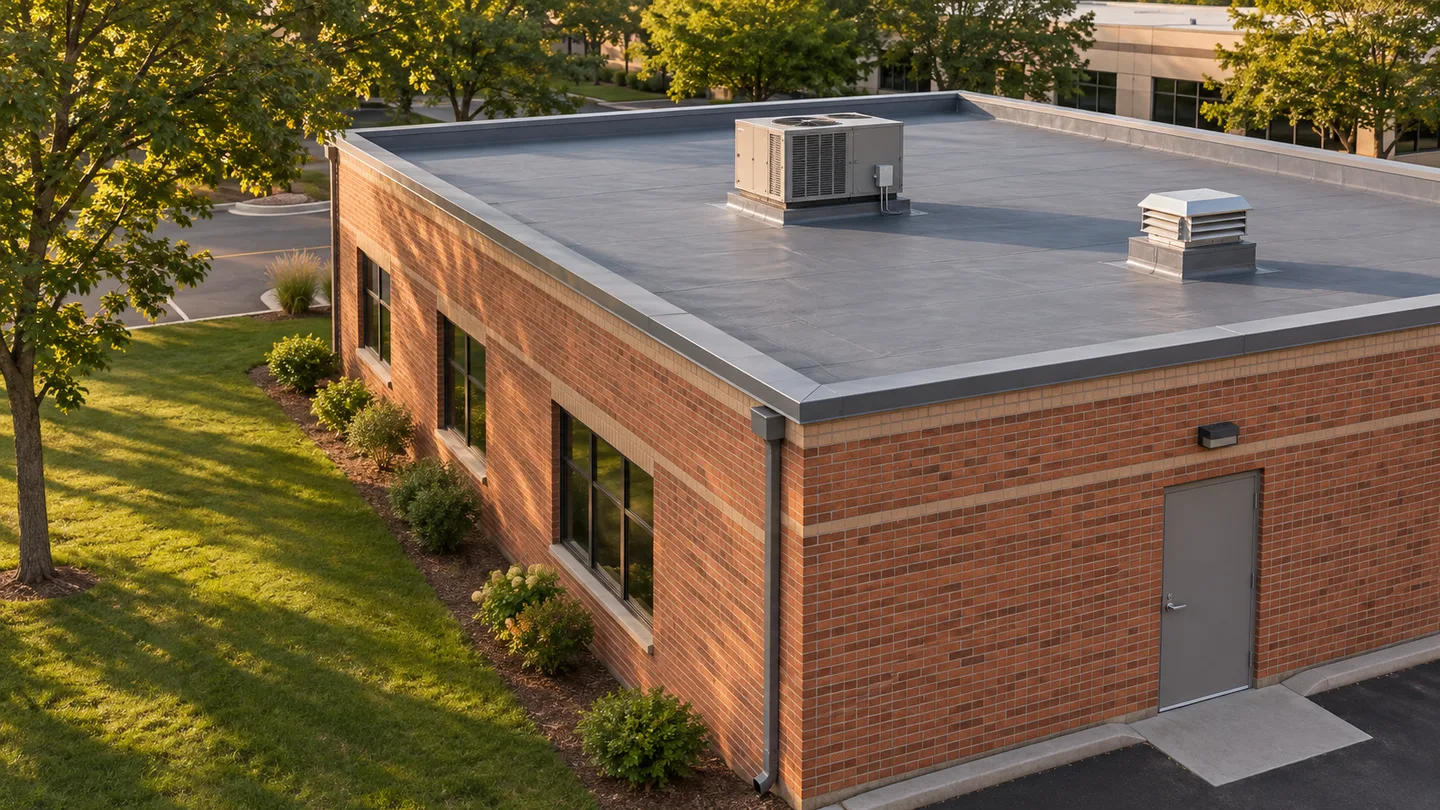
Low-slope roofs need positive drainage and a compatible system. Equipment, solar or vegetation may be considered only with the relevant structural, access, waterproofing and project requirements; usable space is not automatic.
Metal Roofing: Durability and Energy Efficiency
Choose the material/finish and panel/attachment system together. Movement, transitions, adjacent materials and maintenance differ among actual products. A reflective finish can change absorbed heat, but neither a metal label nor low-maintenance marketing establishes annual savings or a service-life guarantee.[1][2][3]
TPO and PVC Roofing: Modern Solutions for Modern Businesses
TPO and PVC are different thermoplastic single-ply membrane families. Compare the selected membrane, substrate, attachment, seams, penetrations and care requirements against building conditions. Reflectance is a product attribute; it does not establish universal energy savings or quick installation.[4][3]
Green Roofing: Combining Sustainability and Aesthetics
A vegetated roof needs designed support, waterproofing, drainage, plant care and safe maintenance access. Do not treat an ordinary roof as a ready-made garden or occupied terrace.
Expert Consultation for Your Commercial Roofing Needs
Compare existing condition, drainage, equipment interfaces, occupancy, access, budget and applicable requirements. Ask who provides each design or specialist scope and how wet or concealed layers are assessed.
FAQ Section
1. What is the typical lifespan of a commercial roof?
Assess the actual assembly, drainage, moisture condition, installation and maintenance history. A generic year range does not predict the remaining life of a particular commercial roof.[5]
2. Can I install solar panels on my commercial roof?
Solar suitability depends on structure, condition, attachments, shading and electrical design. Agree roof and equipment responsibilities, including removal and reinstallation when reroofing.[6]
3. How do I choose between TPO and PVC roofing?
TPO and PVC are different thermoplastic single-ply membrane families. Compare the selected product and complete assembly, substrate, drainage, attachment, details, maintenance and warranty rather than a blanket better-material claim. Read the selected product’s data and requirements against the building conditions.[4]
4. Are there any maintenance requirements for green roofs?
A vegetated roof needs a designed plan for plant care, drainage, waterproofing assessment and safe access. Define responsibility and lifecycle costs for the actual system; possible benefits do not prove the work is worth the effort or has positive payback for every building.[7]
5. What information helps start a commercial-roof assessment?
Gather known roof type, age, earlier work, leakage locations, rooftop equipment and building-use constraints. Ask about inspection access and deliverables, then define any design, trade and occupied-space protection needs.[5]
Start with the building information
Record the existing assembly, drainage, rooftop equipment, access and occupied-space needs. Ask the proposal to identify specialist design, phasing and trade responsibilities.[5]
- Check wet layers and repairability.
- Specify the actual membrane or covering.
- Clarify protection, maintenance and written coverage.
Related information
References
- McElroy Metal: Through-fastened and standing-seam systems
- MCA: Metal Roofing from Aluminum to Zinc
- EPA: Using cool roofs to reduce heat islands
- Sika: PVC membranes and PVC/TPO definitions
- NRCA: Roofing FAQs and proposal checklist
- U.S. DOE: Should I replace my rooftop solar system?
- EPA: Using green roofs to reduce heat islands
General homeowner information, not a property-specific assessment. Requirements and product instructions vary. Leave roof access, diagnosis and hazardous work to qualified professionals.