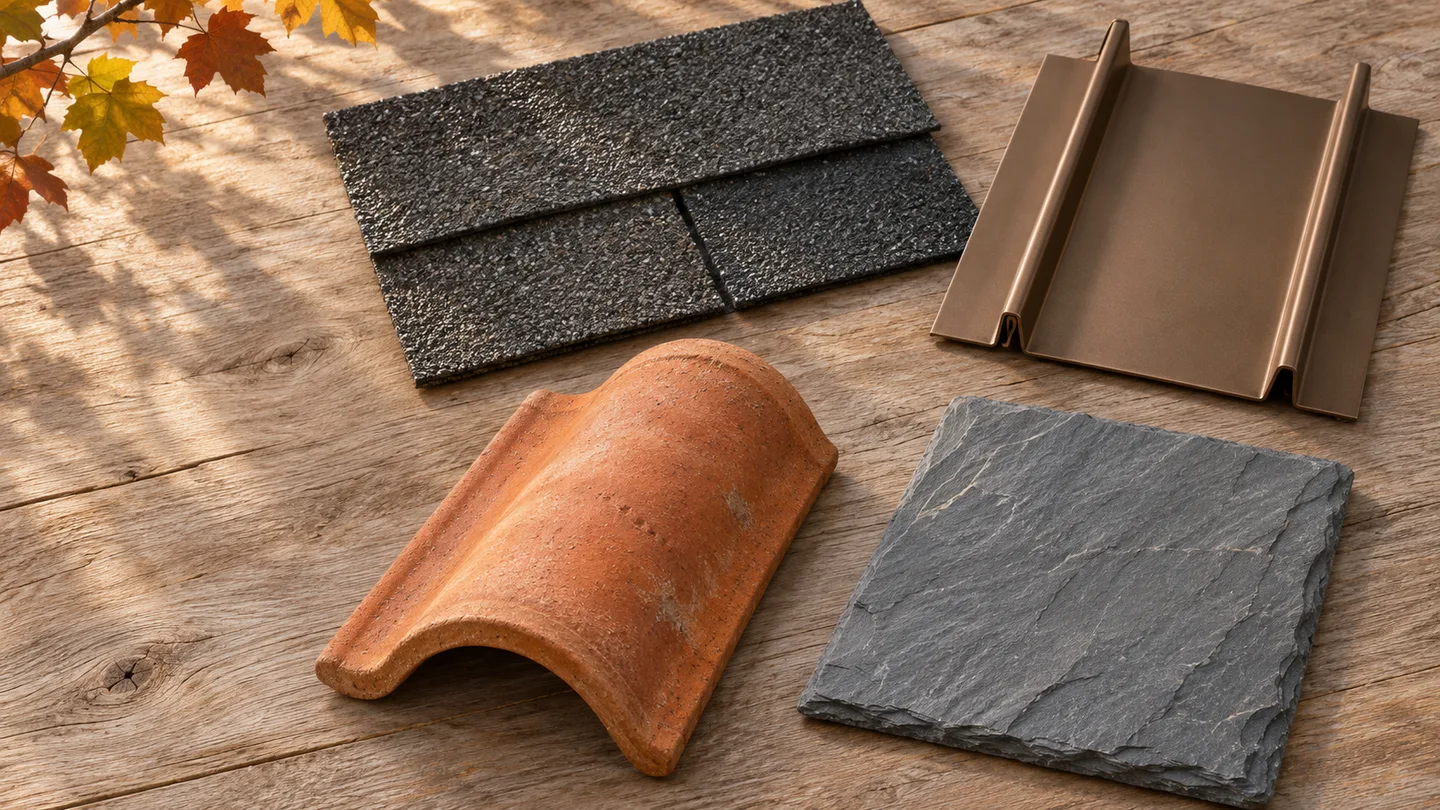
Materials / A thoughtful comparison
Roofing materials. More than a color.
The right roofing material fits the home, the roof assembly, the maintenance expectations and the budget.
Compare the installed system.

Asphalt shingles, metal and tile offer different appearances and practical tradeoffs. A product brochure cannot determine the suitability of a complete roof assembly for a specific house.[1]
Consider the structure, slope, drainage details, existing layers and maintenance expectations alongside the material itself. The proposed installation method and written warranty conditions matter as much as a product name.
- Asphalt shingles: familiar styles and repair considerations
- Metal: panel systems, detailing and snow-release planning
- Tile: weight, underlayment and matching considerations
Good questions make the options clearer.
Ask which exact products are proposed, how their installation requirements will be met and what maintenance is expected. Compare manufacturer defect coverage with the installer’s actual workmanship terms.[2]
For a material change, discuss structural suitability and any related design or approval requirements. For metal roofs, consider how sliding snow will be managed near entrances and walkways. For tile, consider the condition of underlayment and flashing as well as the tiles themselves.
These guides explain the choices. Product availability and contractor capability must be confirmed for the actual project.
Use the material comparison guide to work through the trade-offs across eight choices.


Before the next step
A few useful answers.
Clear answers are a better starting point than assumptions.
Which roofing material is best?
There is no universal winner. Structure, slope, appearance, budget, maintenance and the proposed system all influence the choice.
Does a longer warranty mean a longer-lasting roof?
Warranty duration and actual roof lifespan are different. Coverage depends on the written terms and the conditions of the product and installation.
Can I change from shingles to tile?
Structural suitability and the proposed assembly need review. Do not assume an existing roof can support a heavier material.
Does every metal roof save energy?
No. Product reflectance, building characteristics and climate affect energy performance. Avoid a guaranteed savings assumption.