On this pageShow contentsHide contents
A material’s reputation for longevity is not a service-life guarantee for an entire roof. The covering, underlayment, flashing, attachment and maintenance can age differently. Compare the complete system and the actual product conditions.
Factors Influencing Roofing Lifespan
The longevity of a roofing material can vary widely based on several factors, including:
1. Material Type
Different roofing materials have different natural lifespans. Some materials are inherently more durable and longer-lasting than others.
2. Climate
Local weather conditions can significantly impact the lifespan of your roof. Extreme heat, heavy rainfall, snow, and high winds can all affect how long your roof lasts.
3. Installation Quality
The skill and expertise of the roofing contractor during installation play a crucial role in the roof’s lifespan. Proper installation is essential for maximizing longevity.
4. Maintenance
Regular maintenance and prompt repairs can extend the life of your roof. Neglecting maintenance can lead to premature deterioration.
5. Ventilation
Review moisture sources, air leakage, insulation and the intended vented or unvented assembly. Manufacturer ventilation requirements matter, but ventilation alone does not establish an extra number of roof years or a universal shingle-cooling benefit.[1][2]
Published expectations are context, not a roof diagnosis
Some source-scoped examples help explain why material and conditions matter:
- General design context: NRCA's FAQ says most new roofs are designed for useful service of about 20 years, immediately qualifying that some slate, clay-tile and metal roofs can last longer and that design, product, climate, application and maintenance affect actual life. This is not a universal replacement date.[1]
- Wood roofing: The USDA Forest Products Laboratory's 2011 report says properly installed and maintained wood shakes/shingles should last more than 30 years. That statement carries those conditions; it does not establish the remaining life of a particular wood roof.[3]
- Natural slate: SRCA's 2017 guidelines list ASTM C406 stone-grade expectations: S1 in excess of 75 years, S2 40-75 years and S3 20-40 years. These are slate-grade expectations, not a warranty for every installed roof or a forecast for its flashing, attachment and concealed layers.[4]
Do not turn unlike examples into a complete material ranking. Use the named product, service history and current condition to assess the whole roof.
Lifespans of Common Roofing Materials
Ask what is aging and what can be maintained or repaired. The visible surface and the less visible components do not necessarily reach the same condition at the same time.
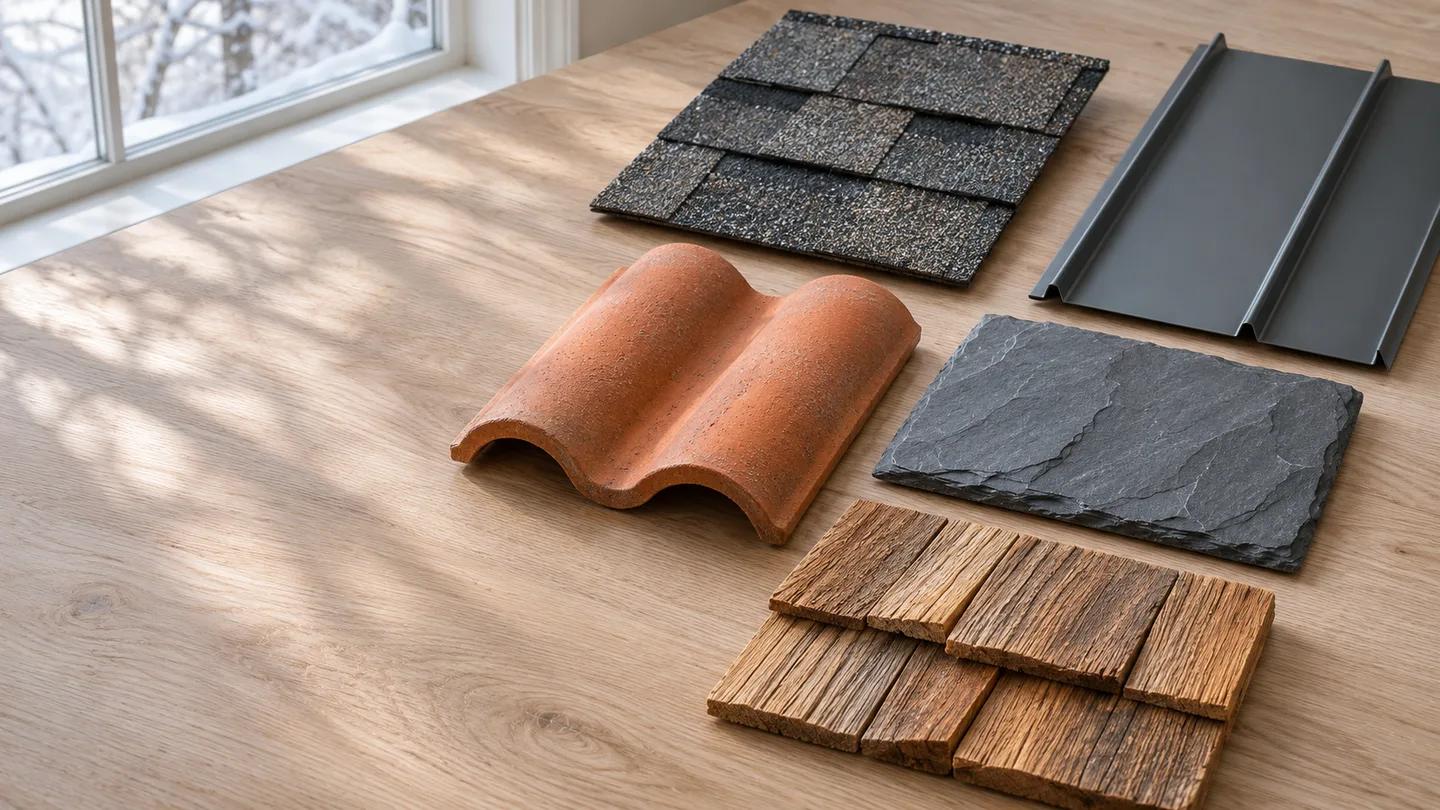
1. Asphalt Shingles
Check the actual shingle, application, exposure and surrounding components. A product warranty describes specified remedies and conditions; it is not a prediction of how long every installed roof will remain serviceable.[1][5]
2. Metal Roofing
Separate the panel substrate, metallic/paint finish, attachments and flashing. A finish warranty and watertightness of the installed assembly are different questions. Corrosion compatibility and access for repairs belong in the evaluation.[6]
3. Wood Shingles or Shakes
Identify the product, manufacture, treatment, drying conditions and care history. The USDA report explains why wood roofing and finish choices need product-appropriate maintenance; one service-life figure cannot establish a particular roof's remaining condition.[3]
4. Slate Roofing
Assess the slate and its attachment, flashing and supporting structure separately. A durable stone covering can still have damaged pieces or details needing repair; replacement stock and specialist access are useful planning questions.[4]
5. Tile Roofing
Distinguish clay/concrete covering from underlayment and flashing. Serviceable-looking tile does not establish the condition of those concealed water-management layers.[7]
6. Composite Roofing
Name the actual product rather than assigning every polymer or composite one expected life. Read its installation, maintenance and warranty information and evaluate current condition.
Making the Right Choice
For a repair-or-replacement decision, record age, prior work, observed defects, compatibility of repairs and what remains concealed. Ask why the complete condition supports the recommendation. A long-lived example elsewhere or a long warranty headline cannot establish the remaining life of this roof.[1]
References
General homeowner information, not a property-specific assessment. Requirements and product instructions vary. Leave roof access, diagnosis and hazardous work to qualified professionals.