On this pageShow contentsHide contents
Black streaks and green growth are not the same roof problem. Identify what is present before choosing a cleaning method. Asphalt shingles need manufacturer-compatible handling, and cleaning should not create a roof-access hazard or damage the surface.
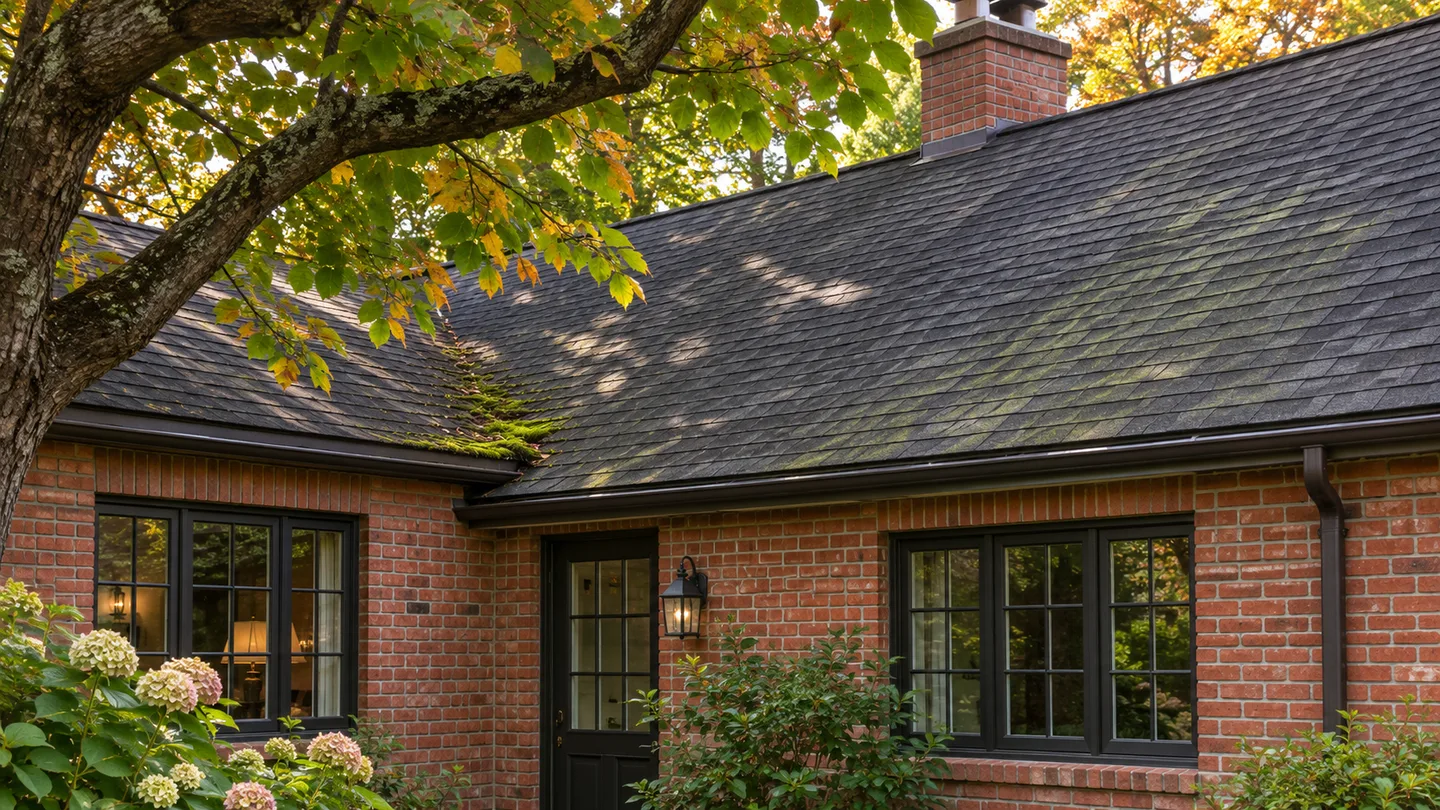
Distinguish staining from growth
ARMA explains that algae discoloration is often mistaken for mold. Moss is a different type of growth and can retain moisture. Appearance alone does not establish structural damage, an indoor health problem or the need for replacement.[1][2]
Why some areas stay damp
Shade, retained debris and repeated moisture can affect where exterior growth develops. Look at the location and surrounding conditions without assuming attic ventilation is the direct cause of every exterior stain. An attic moisture problem needs its own investigation.
Choose a manufacturer-compatible cleaning method
Identify the actual roof covering and ask what its manufacturer permits. ARMA’s asphalt-shingle guidance rejects power washers, brushes and brooms for algae cleaning and warns against other methods without manufacturer approval. Do not transfer cleaning advice for concrete tile or another substrate to asphalt shingles.[2]
DO NOT use a power washer or any type of brush or broom to clean algae from the roof surface.
ARMA, Algae Discoloration of Roofs.[2]
A qualified cleaning plan should address safe access, plants and runoff, product compatibility and the condition of the surface. This guide does not supply a universal chemical mixture or encourage roof access.
Reduce recurring conditions
- Arrange appropriate debris and drainage maintenance.
- Have hazardous or overhanging vegetation assessed by the appropriate professional.
- Ask about approved algae-resistant products or metal-strip options and compatibility with the roof.
- Record recurring stains or moisture symptoms instead of repeatedly treating an unidentified cause.
A strip or treatment is not a guarantee that growth cannot return. Follow actual product guidance rather than promising a maintenance-free surface.
Know when cleaning is not the main question
If there are leaks, damaged covering or signs of moisture inside, arrange diagnosis before treating the issue as cosmetic. Keep people clear of damaged ceilings and leave roof access and repairs to qualified help. NRCA advises that most roofing work should not be DIY.[3]
References
General homeowner information, not a property-specific assessment. Requirements and product instructions vary. Leave roof access, diagnosis and hazardous work to qualified professionals.