On this pageShow contentsHide contents
An ice dam is a water-management problem created by melting and refreezing snow. Replacing shingles alone may not address the heat flow that caused it. Before deciding on a repair, separate the current leak, the ice at the eave and the roof assembly beneath the snow.[1]
How an ice dam forms
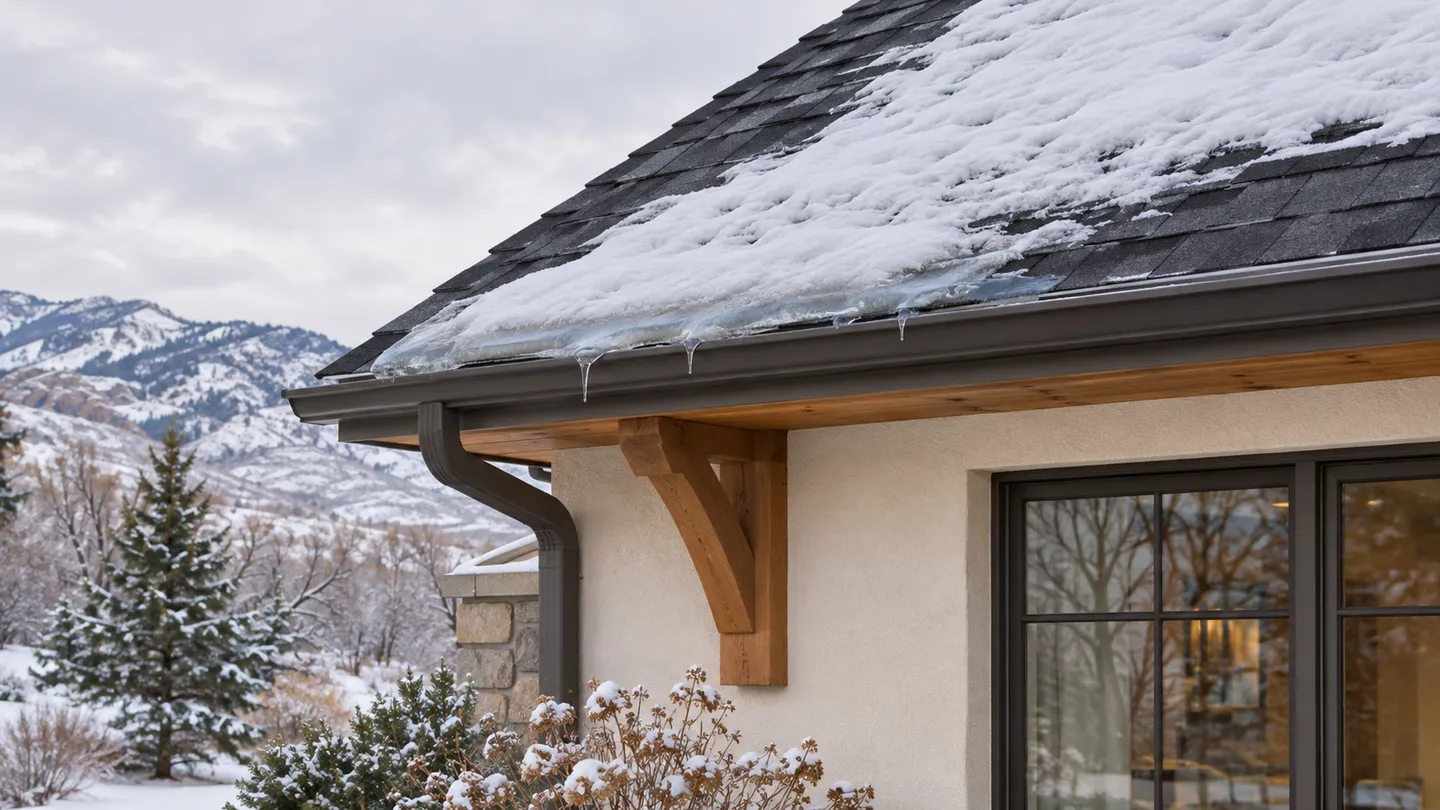
Warmth reaching the roof can melt snow over a warmer area. Meltwater then reaches a colder overhang and refreezes. A buildup at the eave can hold later meltwater back, allowing it to enter between roofing layers and reach the building. DOE explains this melt-and-refreeze pathway.[1]
Icicles can accompany the problem, but an icicle alone is not a remote diagnosis of failed shingles or structural capacity. Snow depth and seasonal snowfall are not the same as a roof’s design load.
What to do while water is entering
- Keep people away from bulging or damaged ceilings and falling ice.
- Protect belongings only where it is safe, and document visible conditions from safe positions.
- Avoid wet electrical equipment; obtain appropriate emergency help for an immediate hazard.
- Arrange qualified assessment and any exterior temporary protection.
Do not climb onto an icy roof, chip ice with sharp tools, puncture a wet ceiling or direct hot water onto the roof. NRCA warns that sharp tools, water and hot-air methods can damage roofing or be unsuitable approaches.[2]
Prevent heat loss at the right boundary
DOE identifies air sealing, adequate insulation and assembly-appropriate ventilation as a combined strategy for reducing heat transfer and the snowmelt that drives ice dams. A ridge vent is not a universal answer. Vented and unvented roof assemblies need different detailing.[1]
Air sealing around chimneys and other heat-producing penetrations also has fire-safety and material-clearance implications. Do not treat those areas as gaps to fill with any available foam or sealant. A qualified assessment should identify the appropriate detail.
Understand what an eave membrane can do
A suitable eave-protection membrane can reduce water-intrusion risk in the assembly. It does not prevent snow from melting and refreezing, establish structural snow capacity or replace the air-sealing and insulation work. Product instructions and project-specific requirements govern the detail.[1]
Gutters and drainage need attention, but an ice dam can occur without gutters. Cleaning a gutter is not a complete ice-dam-prevention plan.[2]
Plan snow release on metal roofs
Metal roofing can shed snow toward a doorway, path or parked vehicle. The Metal Roofing Alliance notes that release sometimes needs to be controlled to protect people and property below. Retention design and attachment depend on the actual roof system.[3]
A smooth roof surface is not proof that all snow loads are safe or that insulation and air sealing no longer matter.
Use the diagnosis to choose repairs
Ask what caused the water entry, which components were damaged and what will correct the underlying condition. A useful proposal separates roofing repairs, air-barrier/insulation work, ventilation changes and any structural evaluation.
See the leak guide for water-entry assessment and the inspection guide for findings and limitations. No website inquiry should be treated as an emergency dispatch booking.
References
General homeowner information, not a property-specific assessment. Requirements and product instructions vary. Leave roof access, diagnosis and hazardous work to qualified professionals.