On this pageShow contentsHide contents
Metal roofing can offer useful options, but the benefits depend on the system and the building. Compare attachment, durability, appearance, reflectance and weight using the proposed product rather than material-wide guarantees.
Know which metal system is proposed
Aluminum, copper and coated-steel products have different material and finish considerations. Galvanized and Galvalume products are coated-steel choices, not a promise of corrosion immunity or self-repair. Evaluate the specific product and exposure.
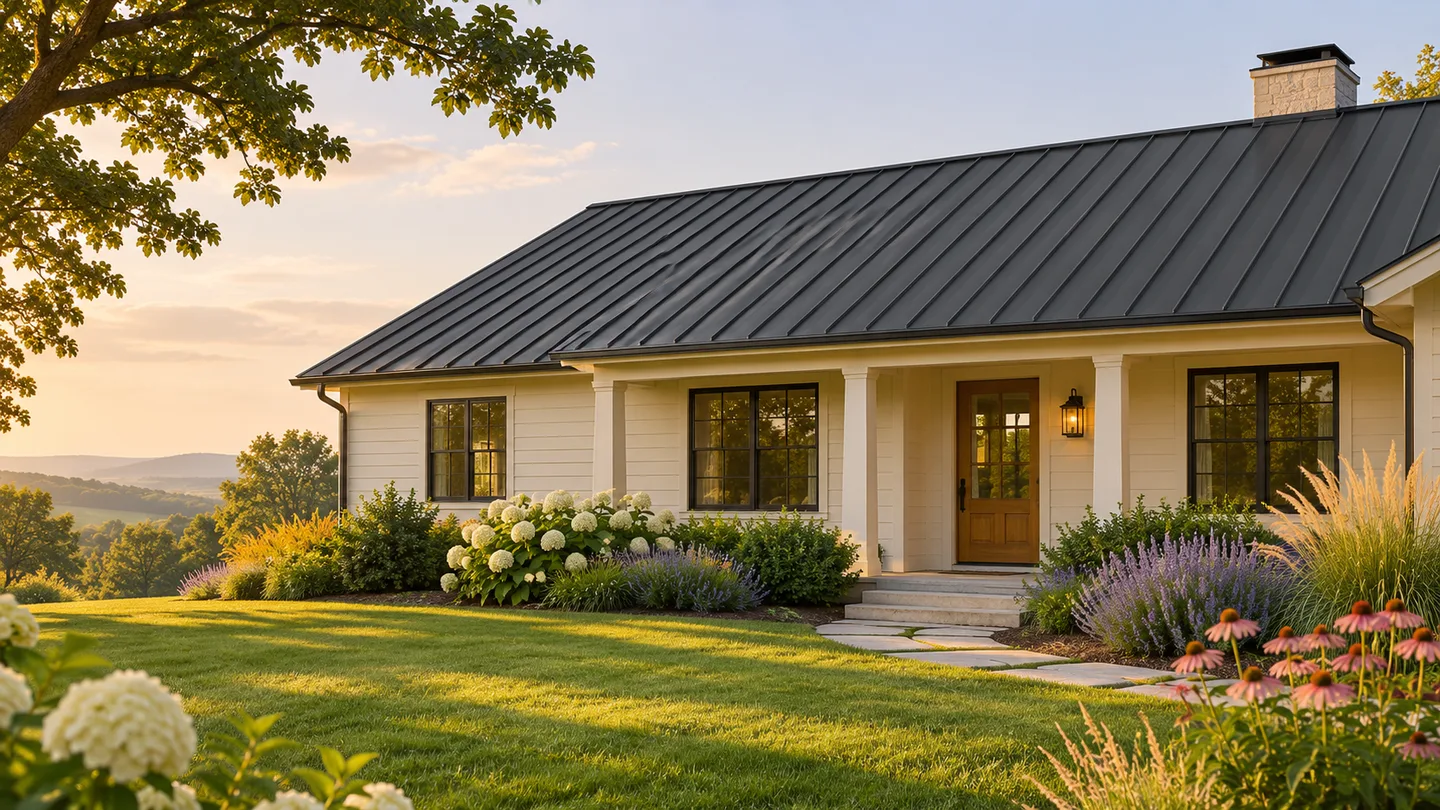
Standing-seam and exposed-fastener panels use different attachment approaches. McElroy explains concealed fastening and thermal movement in standing-seam systems; metal roofing is not simply glued together.[1]
1. Installation planning
Some systems can suit a project’s construction plan, but geometry, removal, preparation and detailing affect the schedule. Re-covering existing roofing is not automatic and does not remove the need to assess layers, condition and requirements.[2]
2. Durability with appropriate maintenance
Compare the panel, finish, attachment, flashing and maintenance instructions. No metal category is immune to every storm, corrosion condition or workmanship problem. Ask how penetrations and dissimilar materials are handled.
3. Design options
Profiles and finishes can give a house a different appearance. Compare physical samples and the visible roof geometry; a color or material name does not tell you how every detail will be executed.
4. Reflective-product options
A particular reflective finish may affect heat gain. Climate, insulation and the rest of the building determine annual energy effects; EPA identifies a potential winter heating trade-off. Metal alone is not a savings guarantee.[3]
5. Weight and system suitability
Compare the actual installed assembly and structural requirements rather than assuming all metal products are lighter in a way that permits an overlay. Snow-release and retention design also deserve attention at paths and entrances.[4]
Read the whole specification
Ask about the system, movement, repairs, roof transitions, finish care and actual written coverage. Use the metal guide alongside the full proposal.
Related information
References
General homeowner information, not a property-specific assessment. Requirements and product instructions vary. Leave roof access, diagnosis and hazardous work to qualified professionals.