On this pageShow contentsHide contents
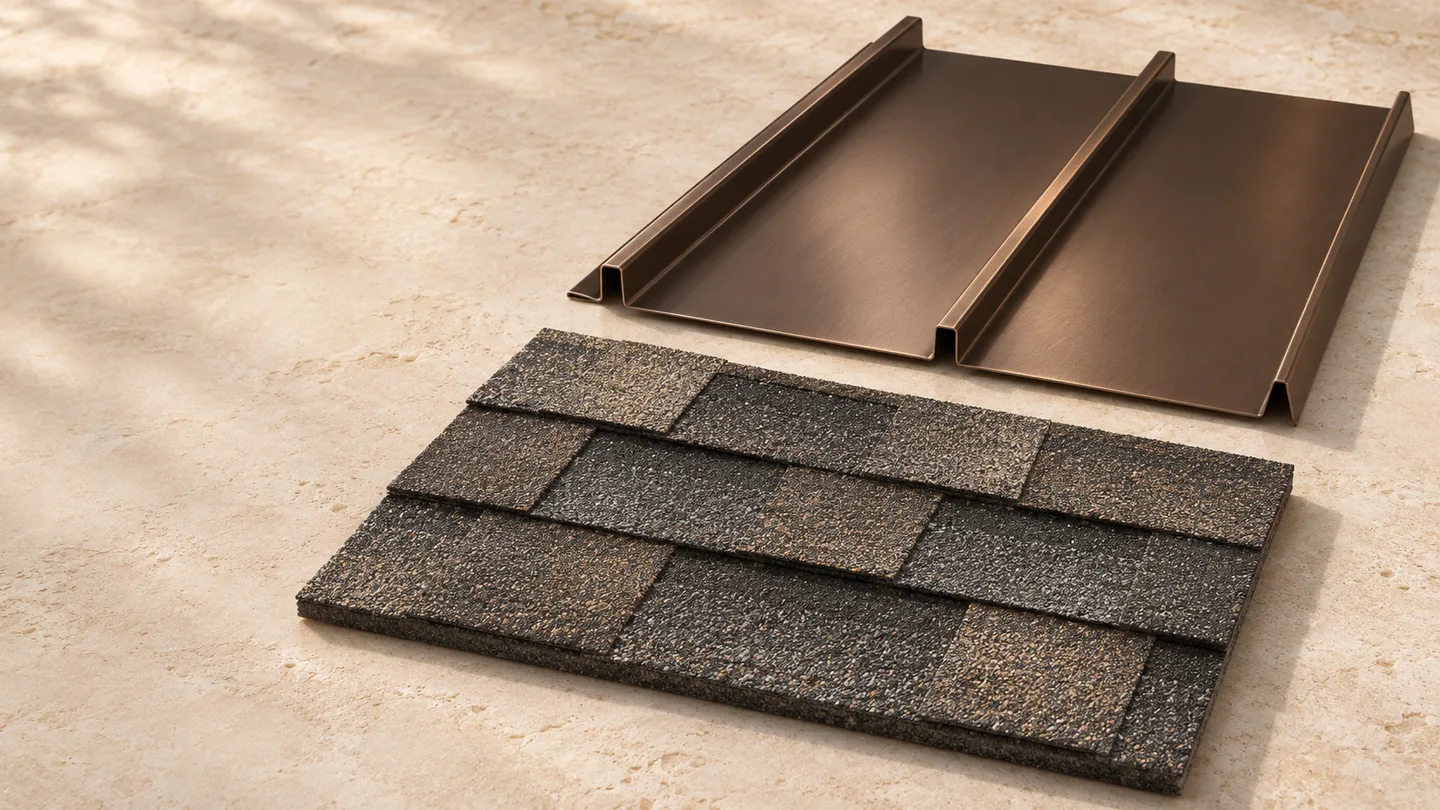
Compare the installed systems, not a contest between material names. Appearance, maintenance, snow release, flashing, tested performance and written coverage can differ substantially among products within both categories.
Metal roofing
Pros
- Durability potential: Compare the actual panel, finish, attachment and maintenance rather than a category-wide age.[1]
- Maintainable components: Ask how fasteners, seams, penetrations and finish issues are inspected and repaired; metal is not maintenance-free.
- Reflective-product options: Actual reflectance, climate and the building determine annual energy effects, including possible winter heating trade-offs.[2]
- Material lifecycle: Verify recycled content and the actual local recovery route instead of assuming every product is recycled in the same way.
- Tested performance: Check the particular product and assembly for wind, impact and fire information; do not apply one rating to every metal roof.
- Appearance: Profiles, colors and finishes can offer different architectural choices. View actual samples.
Cons
- Installed cost: Geometry, detailing, removal and product selection affect the total. Higher initial cost is not a universal payback guarantee.
- Installation detail: Movement, compatible materials and transitions need system-specific work. Confirm relevant experience and actual instructions.[1]
Asphalt shingles
Pros
- Budget options: Compare specific products and complete installed scope rather than assuming every asphalt quote is less expensive.
- Familiar format: A familiar covering still needs suitable preparation, flashing and installation; it is not permission for DIY repairs.[3]
- Appearance choices: Strip, dimensional and luxury categories provide different forms and looks.[4]
- Localized repair: Some defects can be repaired if matching and surrounding condition permit a sound connection. A visible patch is not automatically simple or cheap.
- Service-life planning: Product suitability, application, exposure and care matter; a warranty period is not a lifespan prediction.[3][5]
Cons
- Weather exposure: Evaluate the actual product and assembly; no category is immune to storms or installation defects.
- Condition monitoring: Record changes and follow product care requirements rather than assuming a fixed maintenance schedule.
- Waste and recovery: Confirm removal and disposal plans and whether a relevant recovery route exists locally.
- Energy: Assess actual reflectance and climate effects rather than ranking every asphalt roof below every metal roof.[2]
- Fire classification: Read the tested assembly and product information. A material name alone is not a valid universal fire-performance comparison.
Compare the complete proposals
Swipe to compare →
| Item | Ask both proposers |
|---|---|
| Existing roof | What is removed, retained and inspected? |
| Details | How are flashing, edges and penetrations handled? |
| Access and structure | What constraints or specialist work apply? |
| Maintenance | Which components and instructions need follow-up? |
| Snow | Does the chosen system need a controlled snow-release plan? |
| Terms | Which product, workmanship and change-order terms apply? |
Keep the decision specific to the house and the proposed work. Neither a generic lifespan nor a sales promise establishes the better choice.[3][6]
References
General homeowner information, not a property-specific assessment. Requirements and product instructions vary. Leave roof access, diagnosis and hazardous work to qualified professionals.