On this pageShow contentsHide contents
Material selection starts with the building and the proposed assembly. Keep slope, support, flashing, product requirements and maintenance in view while comparing appearance and budget.
The Importance of Roofing
Your roof is more than just a cover over your head. It’s a shield against the elements, protecting your home from rain, snow, wind, and sunlight. A well-chosen roof can enhance your home’s energy efficiency and curb appeal.
Factors to Consider
Use the building’s slope, support, drainage and exposures to narrow the comparison, then consider appearance, maintenance and total installed scope.[1]
Asphalt Shingles
Affordable and Versatile
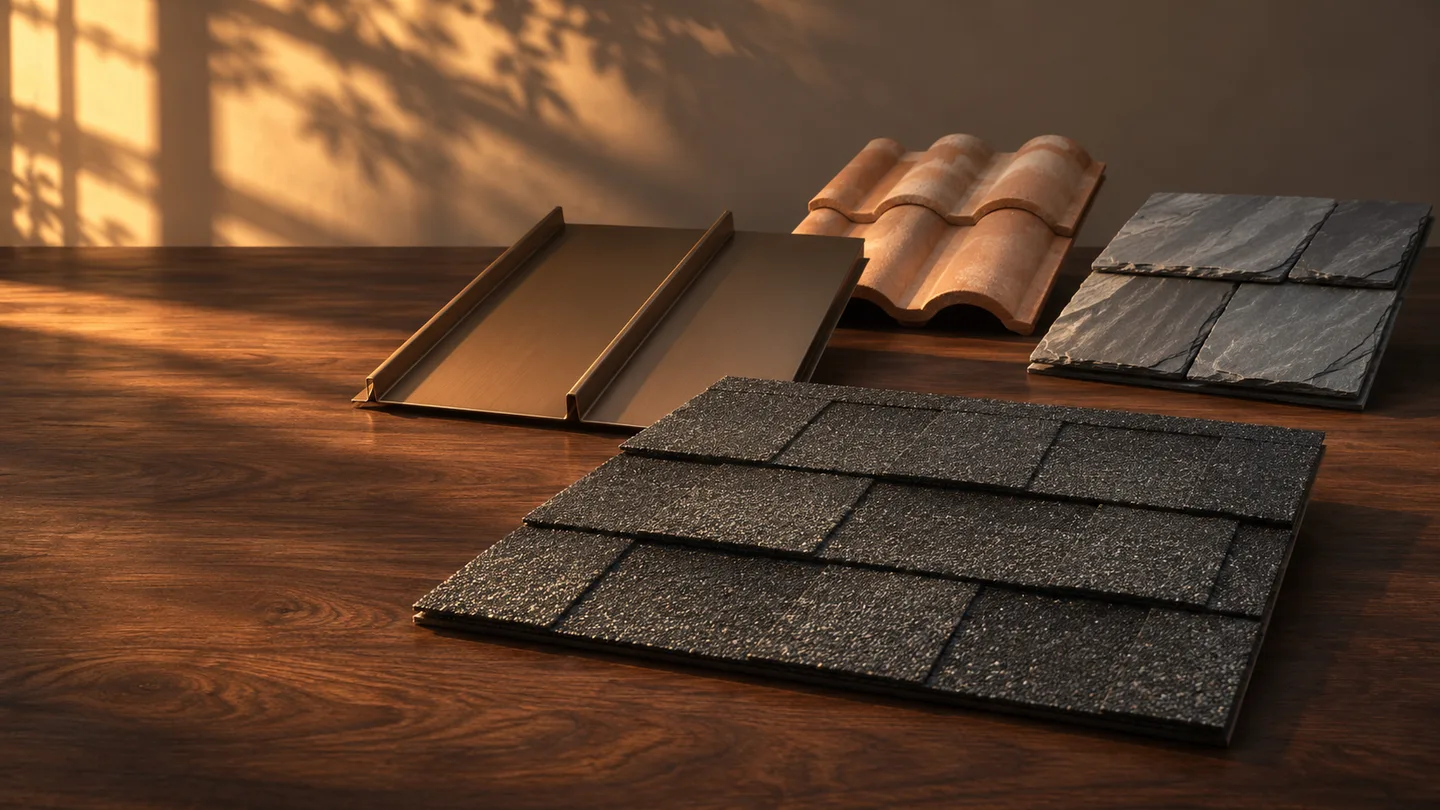
Asphalt products include strip, dimensional and luxury categories. Compare the exact product and its installation requirements; category and appearance do not establish a universal rating or service life.[2]
Metal Roofing
Durability and Sustainability
Compare the actual panel, finish, attachment and maintenance. Standing-seam and exposed-fastener systems differ, and a material-wide lifespan or minimal-maintenance promise is not a specification.[3]
Energy Efficiency
Evaluate the actual reflective finish and the building’s annual energy needs. EPA notes both cooling benefits and possible cold-climate heating penalties; not every metal roof has the same result.[4]
Slate and Tile
Elegance and Longevity
Slate and tile require suitable support and specialist detailing. Verify the company’s relevant experience and the proposed system rather than treating appearance as proof of durability.
Premium Roofing Options
Natural slate, clay tile, concrete tile and synthetic look-alikes are different products. Compare support, underlayers, flashing and repair access with the visible covering. An unusually old roof elsewhere is not a forecast for this proposed assembly.[5][6]
Wood Shingles and Shakes
Natural Beauty
Wood shingles and shakes offer a rustic and natural look. They are often chosen for their aesthetic appeal.
Maintenance and Lifespan
Wood shingles and shakes need product-specific care and assessment of fire requirements, exposure and suitability. Ask for the actual maintenance instructions instead of a universal comparison of lifespans.
Concrete and Clay Tiles
Style and Strength
Concrete and clay tiles are known for their style and strength. They come in various shapes, colors, and textures, allowing for customization.
Weight and Installation
For concrete tile, Eagle recommends determining structural suitability, with engineering assessment where needed. Check the actual proposed weight and system rather than assuming every house needs the same reinforcement.[5]
Synthetic Roofing Materials
Innovation and Affordability
Synthetic roofing materials, like polymer and rubber, offer innovative solutions that mimic the appearance of other materials.
Durability and Appearance
Synthetic and composite products vary. Compare the named product, tested assembly, installation instructions, maintenance and warranty rather than applying one price or performance label to the category.
Choose a specified assembly
Put the selected product, slope/support suitability, attachment, transitions and maintenance into a complete written scope. Compare product and workmanship coverage separately. A material name or attractive sample cannot establish all of those details.[1]
- Identify the named covering and system components.
- Clarify removal and hidden deck work.
- Compare care, repair access and actual written remedies.
References
General homeowner information, not a property-specific assessment. Requirements and product instructions vary. Leave roof access, diagnosis and hazardous work to qualified professionals.