On this pageShow contentsHide contents
Cold-weather roofing choices need more than a material ranking. Structural snow capacity, water management, snow release and the attic assembly matter alongside the selected product.
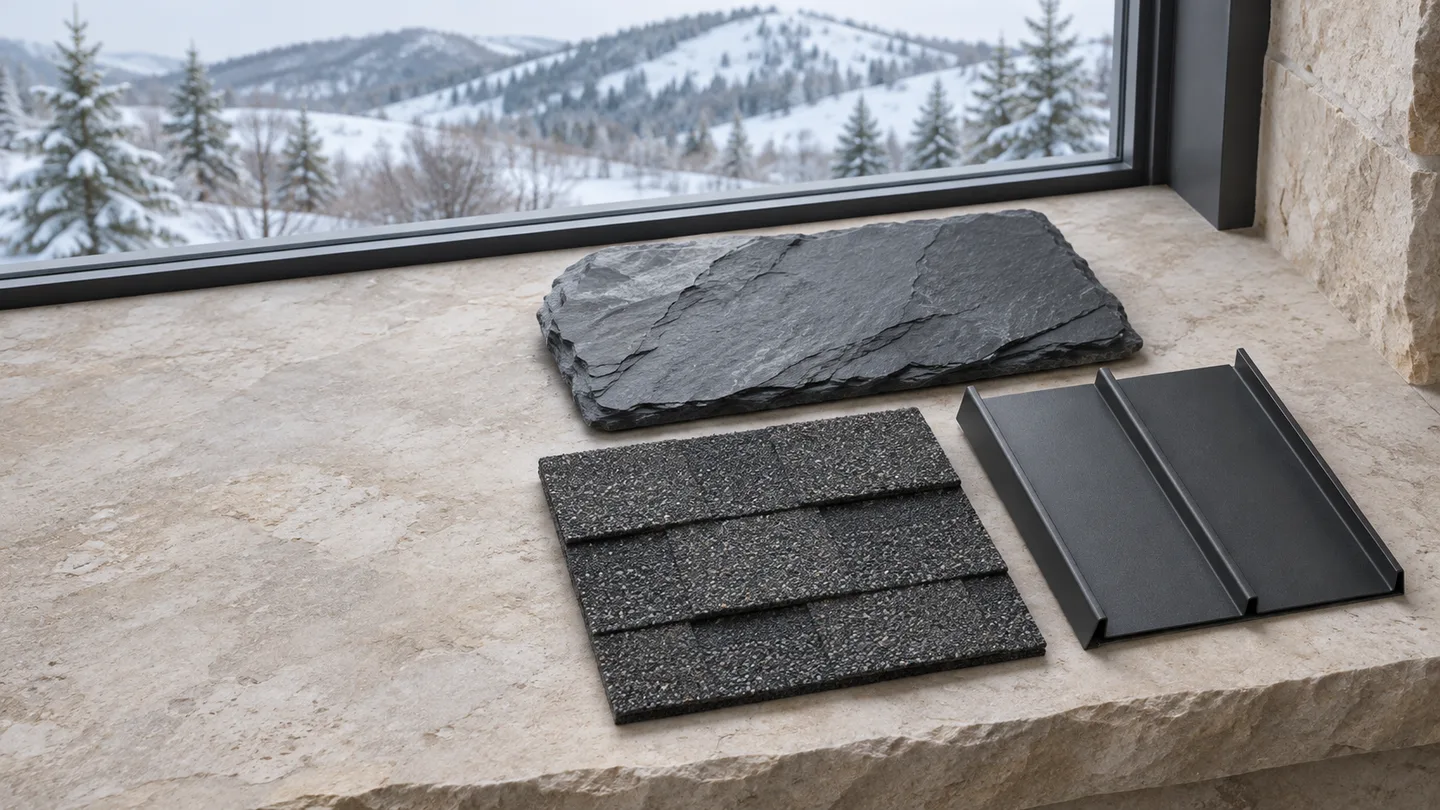
Asphalt: compare the product and installation conditions
Asphalt-shingle products remain part of the comparison, not automatically excluded by a cold-climate label. Review the specified assembly, eave protection and actual winter application guidance. GAF's temperature bulletin discusses handling and delayed sealing for its fiberglass asphalt shingles; it is not a universal cutoff for every product.[1]
Compare what work can be completed properly under the expected conditions, with product-specific instructions and safe access. Appearance category alone does not establish snow-load capacity, impact performance or service life.[2]
Slate: assess the support and details
Natural slate needs suitable structural support, attachment, flashing and specialist repair access. Its mass is not a substitute for the building’s insulation or air barrier, and one universal wind speed or lifespan cannot describe every assembly.
Ask how snow, penetrations, underlying layers and maintenance access are addressed. A long-lived roof on another building is not an assessment of the proposed system.
Metal: plan snow release as well as weathering
Metal systems vary in panel, finish and attachment. Standing-seam and exposed-fastener products require different details, and low maintenance does not mean no maintenance.[3]
Snow can slide toward an entrance, path or equipment. The Metal Roofing Alliance describes the need to control release in some situations. Do not infer that all loads are safe because the surface is smooth or that heating cables are a universal remedy.[4]
Check the whole cold-weather assembly
Air leakage, insulation, moisture sources and the intended vented or unvented roof need review together. DOE identifies these as part of reducing heat transfer that contributes to snowmelt and ice-dam formation.[5]
- Support and the applicable design loads.
- Covering, underlayment, flashing and drainage.
- Eave water protection and heat-flow causes.
- Actual product instructions, care and safe access.
Compare a complete proposal
Specify the actual system and why it suits the property. Ask about repairability, snow release, concealed-work allowances and product/workmanship terms. Confirm project-specific requirements locally rather than treating snowfall depth or a generic material ranking as a design rule.[6][7]
Related information
References
- GAF R-133: Temperature extremes and fiberglass asphalt shingles
- CertainTeed: Types of asphalt roofing shingles
- McElroy Metal: Through-fastened and standing-seam systems
- Metal Roofing Alliance: Snow and ice
- U.S. DOE: Eaves and ice-dam prevention
- NRCA: Roofing FAQs and proposal checklist
- Layton City Building Division
General homeowner information, not a property-specific assessment. Requirements and product instructions vary. Leave roof access, diagnosis and hazardous work to qualified professionals.