On this pageShow contentsHide contents
Durability and sustainability are related questions, not interchangeable promises. Look at the assembly, repairability, maintenance and actual energy performance before treating a product label as a long-term result.
A resilient roof needs a suitable assembly and maintenance plan for its actual exposures. A sustainable label alone does not establish durability, energy results or the scope of a contractor’s work.
The Importance of Sustainable Roofing
Start with the desired result: lower absorbed solar heat, electricity generation, rainwater retention, repairability or lower material waste. Those are different goals with different evidence. A sustainable label does not by itself establish added service life, lower bills or lower total environmental impact.[1][2]
Cool Roofing: Reflecting Heat and Enhancing Energy Efficiency
Reflective products reduce absorbed solar heat, but a product's reflectance and a home's annual energy outcome are not the same thing. EPA identifies possible winter heating penalties in cold climates. Check the roof type and named product before considering a coating; ARMA advises against field coatings on installed asphalt shingles.[1][3]
Green Roofs: Bringing Nature Closer to Home
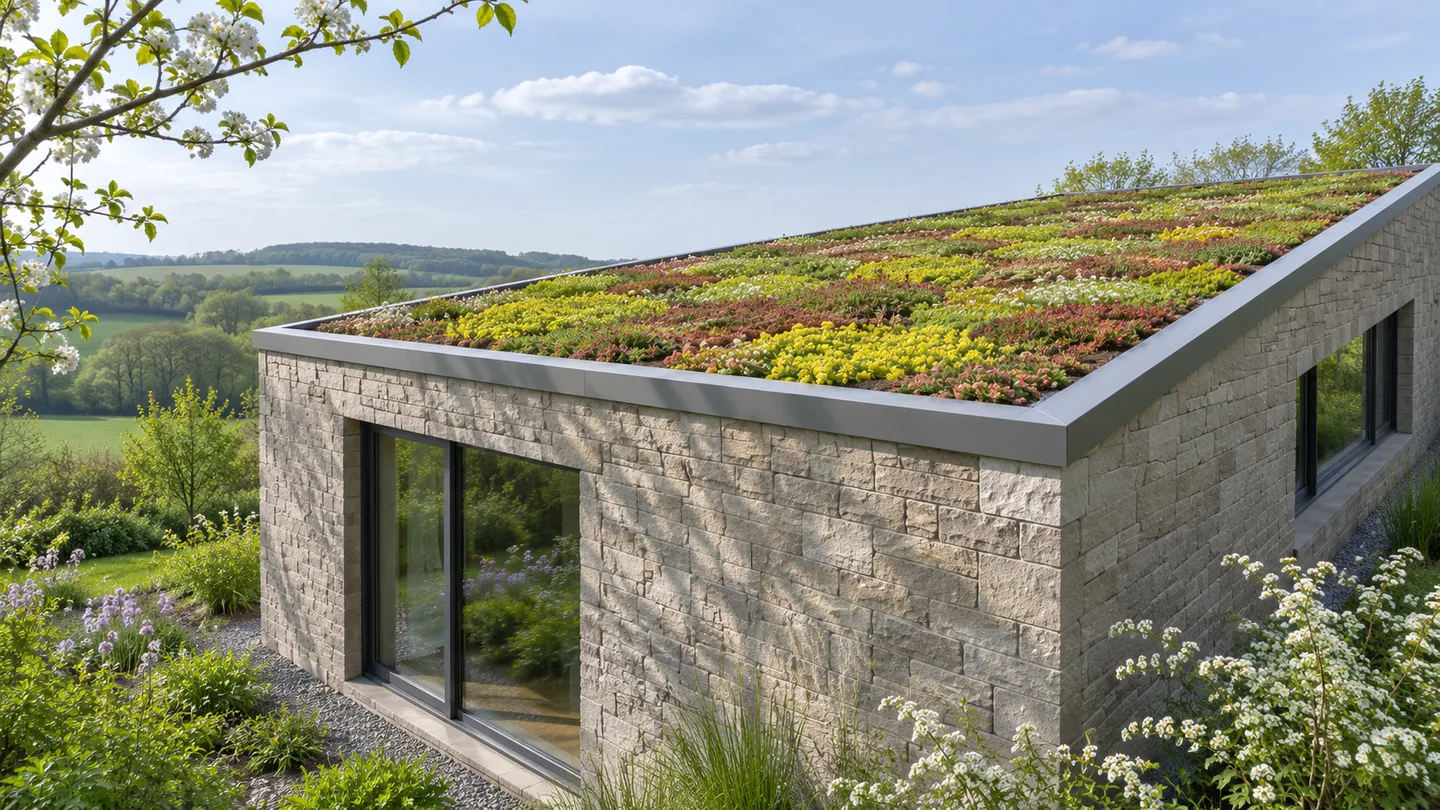
A living roof uses a designed planting, growing-medium, drainage and waterproofing assembly. EPA describes potential heat-island, runoff and habitat benefits. Support, retained-water loads and continuing care belong in the design; an ordinary existing roof is not automatically suitable for a planted space or rooftop use.[2]
Solar Roofing: Harnessing the Power of the Sun
Solar roofing takes advantage of renewable energy sources to power your home. Solar panels or solar shingles integrated into your roof allow you to generate electricity from sunlight. This not only reduces your reliance on traditional energy sources but also provides a source of clean energy for your home.
Choosing the Right Sustainable Roofing Solution
Compare the intended environmental goal with structure, waterproofing, energy performance, access and ongoing care. Ask who provides the relevant design, installation and maintenance rather than assuming one provider handles every system.
FAQ Section
1. Are sustainable roofing options more expensive?
Compare the actual installation, maintenance, repair access and annual energy effects over the proposed system’s life. A sustainable label does not guarantee lower upkeep, a positive payback or longer service.[1]
2. Do green roofs require a lot of maintenance?
A vegetated roof needs an actual plan for plant care, drainage, waterproofing checks and safe access. Structure, retained-water loads and maintenance responsibility belong in the design; it is not simply occasional pruning.[2]
3. How do solar panels affect the roof’s integrity?
Solar attachments, loads, flashing, roof condition and future access require coordination. Equipment above the roof is not an automatic protective layer or a guarantee that installation leaves roof performance unchanged.[4]
4. Can I combine different sustainable roofing options?
Some projects combine technologies, but compatibility, structural needs, drainage, access and maintenance must be designed together. A solar installation above a roof and an integrated solar covering also have different repair and equipment-removal implications. No universal combination or payback follows from the label.[4][2]
Compare the whole lifecycle
Define the desired result and the actual product or assembly. A sustainable label does not remove maintenance, attachment, moisture or energy trade-offs.[1]
- Check structure and waterproofing.
- Clarify solar and vegetation maintenance responsibilities.
- Compare annual energy effects and documented terms.
Related information
References
General homeowner information, not a property-specific assessment. Requirements and product instructions vary. Leave roof access, diagnosis and hazardous work to qualified professionals.