On this pageShow contentsHide contents
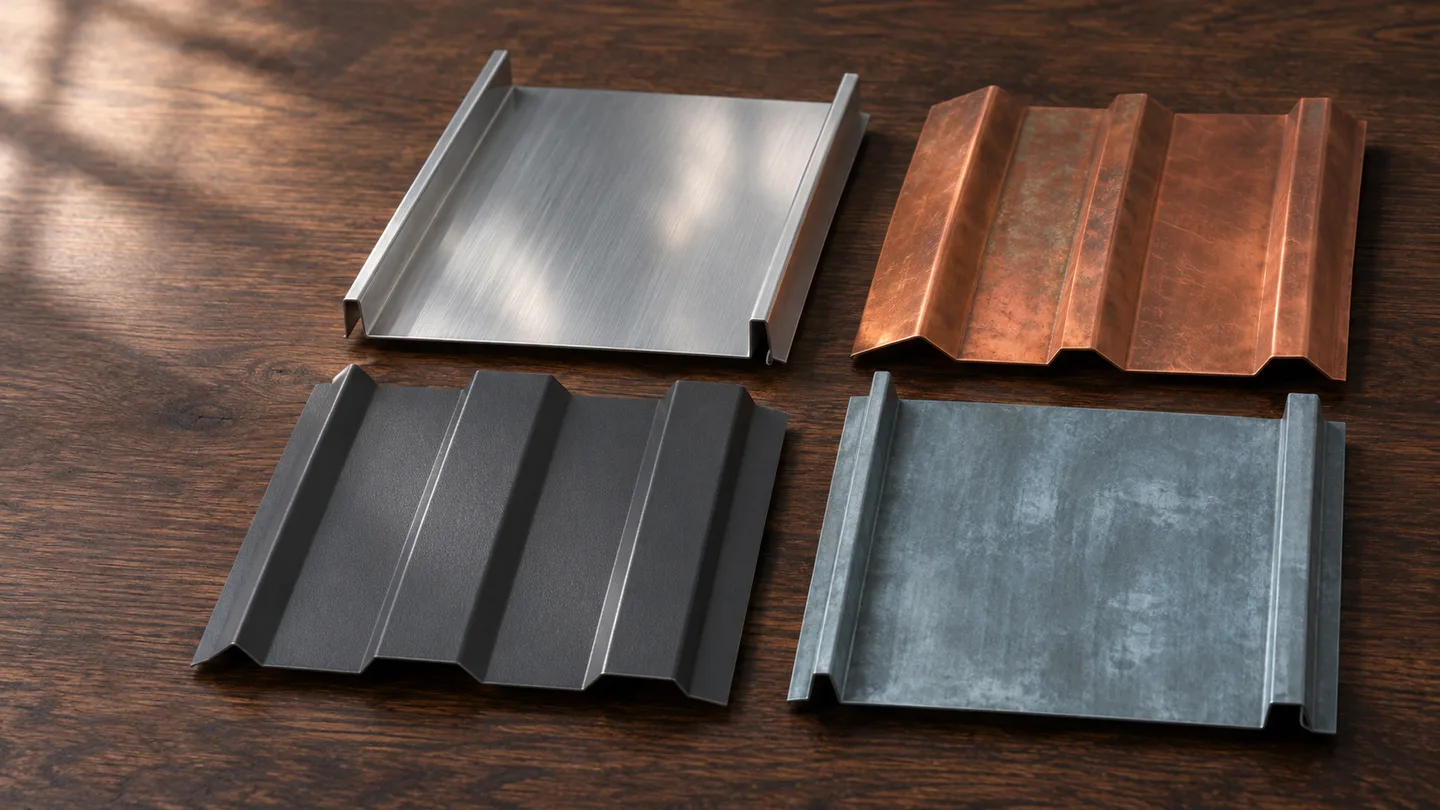
Aluminum, copper, steel and architectural zinc can all be made into roofing products, but they are not interchangeable. The metal affects appearance, corrosion behavior and detailing. The panel profile, seams, clips, fasteners and supporting assembly determine how the finished system works. Start with both questions: which metal, and which roof system?[1]
Compare the four materials
The useful trade-offs are more specific than a universal lifespan or a claim that one metal is always best.
| Material | Useful distinction | Detail to investigate |
|---|---|---|
| Aluminum | A different corrosion response from coated steel; used where exposure makes that relevant. | Thermal movement, panel design and compatible adjacent materials. |
| Copper | A naturally changing surface and a wide range of fabricated sheet details. | Runoff, fasteners, adjacent metals and the intended weathered appearance. |
| Steel | A steel substrate protected by a specified metallic coating and, often, paint. | The coating/finish combination, cut edges, exposure and maintenance. |
| Architectural zinc | A zinc roofing alloy that develops a patina; not the same as zinc-coated steel. | Underside moisture, ventilation/separation details and upstream runoff. |
These distinctions come from material guidance, not a ranking of particular installed products. Product specifications and the roof design still govern.[1][2][3]
Pros and Cons of Aluminum Roofing
Aluminum can be a useful corrosion-related choice in some exposures. That does not make a coastal selling point an automatic advantage for a particular Layton house. Its detailing needs to accommodate thermal movement, with the panel length and attachment method considered together. A thin, poorly detailed panel is not rescued by the material name.[1]
Compare the actual panel thickness, finish, seam and attachment specifications. Ask how the system connects to flashings and other metals, rather than treating a sample color as the whole product.
Pros and Cons of Copper Roofing
Copper changes appearance as it weathers. The developing patina is part of that process, but the color and timing depend on exposure. Choose with the weathered appearance in mind, not a promised date when every surface will turn the same shade.[2]
Compatibility and drainage matter. The Copper Development Association warns against copper wash draining onto exposed aluminum; runoff can also mark some porous materials. Those issues need coordinated gutter, flashing and adjacent-material details. They are not reasons to assume every copper roof will stain its surroundings.[2]
Pros and Cons of Steel Roofing
Coated-steel roofing combines a substrate with protective layers. Galvanized and Galvalume products are coated-steel choices, not separate solid-metal roofing categories. The metallic coating and optional painted finish have different functions and warranty terms.[1]
Read the specified exposure limits and care instructions, including how cut edges and damaged finishes are handled. A paint warranty is not automatically a promise against every form of corrosion or a warranty for the complete roof installation.[1]
Pros and Cons of Zinc Roofing
Architectural zinc develops a changing surface, but patina does not mean failed seams or underside corrosion repair themselves. RHEINZINK's material guidance discusses moisture and separation details, incompatible upstream materials and differences between product lines. Those are reasons to use the exact product's instructions, not to label every zinc roof maintenance-free.[3]
A zinc proposal should identify the actual alloy/product, supporting layers, drainage and compatible adjoining metals. Some coated finishes have their own cleaning requirements. No single maintenance schedule fits every zinc product or exposure.[3]
Material choice is different from panel-system choice
Standing-seam and exposed-fastener systems differ in attachment and how they accommodate movement. The metal itself cannot establish wind resistance, leak performance or suitability for the roof slope. The complete assembly includes seams, clips or fasteners, panel dimensions, substrate and flashing.[4][1]
The metal roofing guide explains the system questions. For a two-covering decision, compare metal with asphalt shingles.
What to compare in a proposal
- Named material, coating or finish, panel profile and attachment method.
- Roof slope and support, existing layers and removal requirements.
- Flashing, gutters, penetrations and compatibility with adjacent materials.
- Access for future inspection, repair and any equipment work.
- Separate product, finish and workmanship coverage.
Discuss the actual product and project rather than buying a universal service-life or savings claim. Use Request a Quote to describe the roof and the options you want compared, or return to Layton Roofers home.
References
General homeowner information, not a property-specific assessment. Requirements and product instructions vary. Leave roof access, diagnosis and hazardous work to qualified professionals.