On this pageShow contentsHide contents
The existing roof helps determine which material changes are practical. Before comparing colors, establish the roof slope, condition of the deck, structural support, drainage and what will happen at walls, chimneys and roof-mounted equipment. A visually appealing covering can still be the wrong fit for the proposed assembly.[1]
Start with the house, then compare the covering
- Identify the roof shape and slope. A material suited to a pitched water-shedding roof is not automatically suitable for a low-slope area.
- Establish what is underneath. Existing layers, deck condition and hidden repairs affect the removal and replacement scope.
- Check support before a weight change. Do not assume a house can accept tile or natural slate because an example photograph looks similar.
- Coordinate transitions. Flashing, drainage, skylights and solar equipment need an assigned scope.
- Plan future care. Access, matching repair stock and product instructions matter after installation.
These are selection questions, not a design calculation or confirmation that a provider installs every option.[1][2][3]
Asphalt shingles: compare named products
Strip, dimensional and luxury shingles differ in construction and appearance. CertainTeed describes strip shingles as single-layer and dimensional products as multilayer. Features such as impact resistance or reflectivity belong to specific products, not automatically to the category name.[4]
For an existing shingle roof, compare the complete specified assembly and which flashings will be replaced. Do not assume field coatings are an appropriate way to renew installed shingles; ARMA advises against coatings and rejuvenators over that covering.[5]
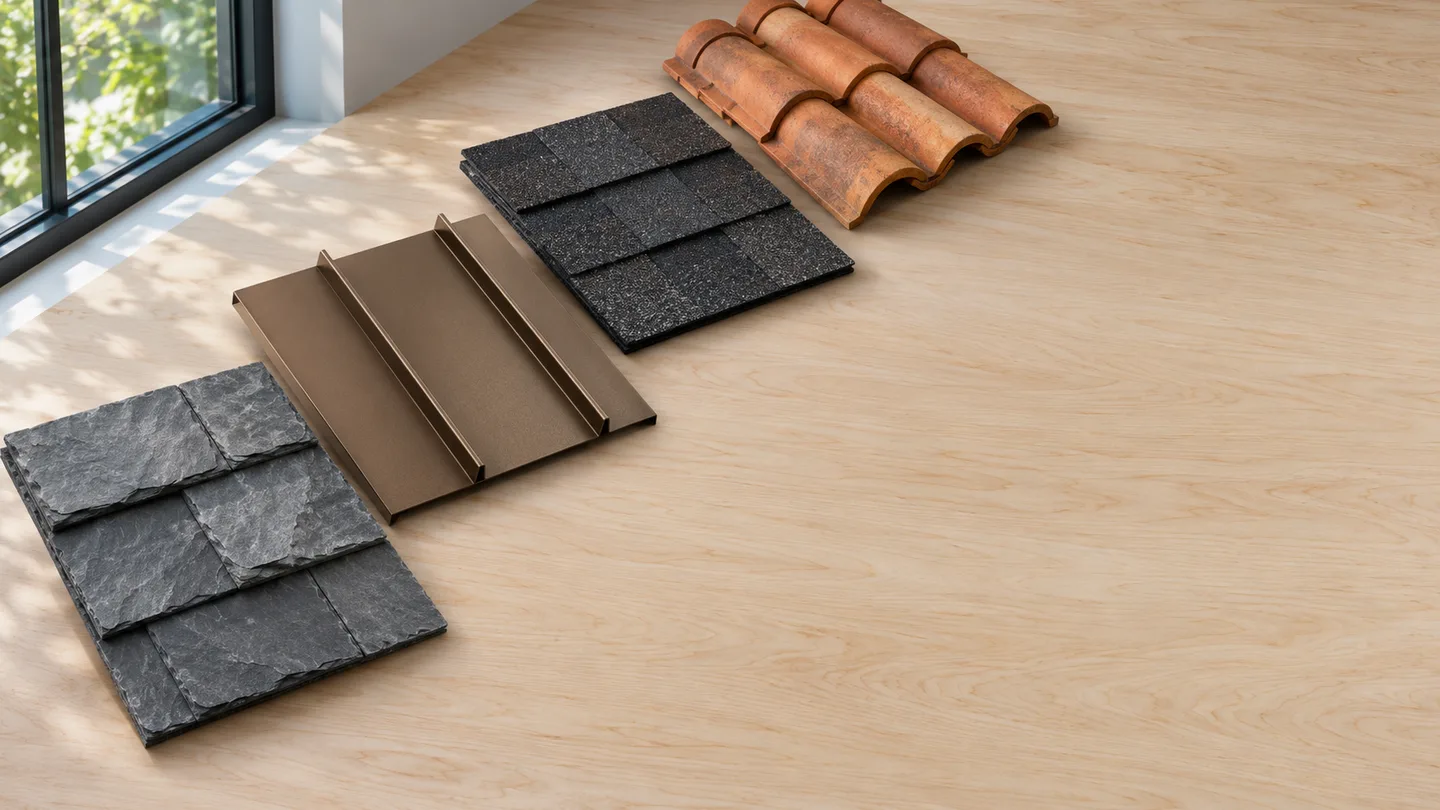
Clay Tiles
Clay tile offers a different profile and surface character from asphalt. The selection still involves support, underlayment, flashing, attachment, matching and access for repairs. Concrete tile is a separate product category; a manufacturer's concrete-tile guidance is not a specification for every clay product.[2]
If changing from another covering, have the supporting structure and actual product requirements evaluated before agreeing to the work. Tile appearance alone does not establish that the layers beneath it remain serviceable.
Built-up Roofing (BUR)
BUR is a low-slope assembly made with reinforcing layers and bituminous materials with specified surfacing. It belongs in a slope-and-system discussion, not in a ranking beside pitched-roof shingles as if every roof could accept either. Drainage, substrate, penetrations and work around occupied spaces need a building-specific proposal.[1]
Metal
Choose the metal and the system together. Coated steel, aluminum, copper and architectural zinc have different material and compatibility considerations; standing-seam and exposed-fastener systems have different attachment and movement details.[6][7]
Evaluate transitions to adjoining roofs, gutters and other metals. If snow release could affect a path or doorway, ask how the assembly addresses it. Do not choose from an unsupported noise, energy-saving or lifetime claim.[8]
Slate
Natural quarried slate is stone; slate-look asphalt and synthetic products are different coverings. Natural slate selection includes source, thickness, size, flashing, fastening and repair supply. It is not defined by a single country of origin or a universal service-life promise.[3]
The supporting structure and specialist installation/repair requirements are part of the decision. Preserve matching stock where appropriate and avoid unnecessary foot traffic over slate.[3]
Compare equivalent installed work
Ask for a base proposal and separately priced alternatives against the same removal, deck-repair allowance, underlayment, flashing, drainage and cleanup assumptions. Otherwise, a price difference may describe a different scope rather than the material alone.[1]
The broader material comparison explains category trade-offs, while asphalt, metal and wood options offers a narrower comparison. For roof replacement information, start with the condition and scope. You can describe the project through Request a Quote or explore Layton Roofers.
References
- NRCA: Roofing FAQs and proposal checklist
- Eagle Roofing: Concrete tile FAQs
- SRCA: Natural quarried roofing slate guidelines
- CertainTeed: Types of asphalt roofing shingles
- ARMA: Coatings on installed asphalt shingles
- McElroy Metal: Through-fastened and standing-seam systems
- MCA: Metal Roofing from Aluminum to Zinc
- Metal Roofing Alliance: Snow and ice
General homeowner information, not a property-specific assessment. Requirements and product instructions vary. Leave roof access, diagnosis and hazardous work to qualified professionals.