On this pageShow contentsHide contents
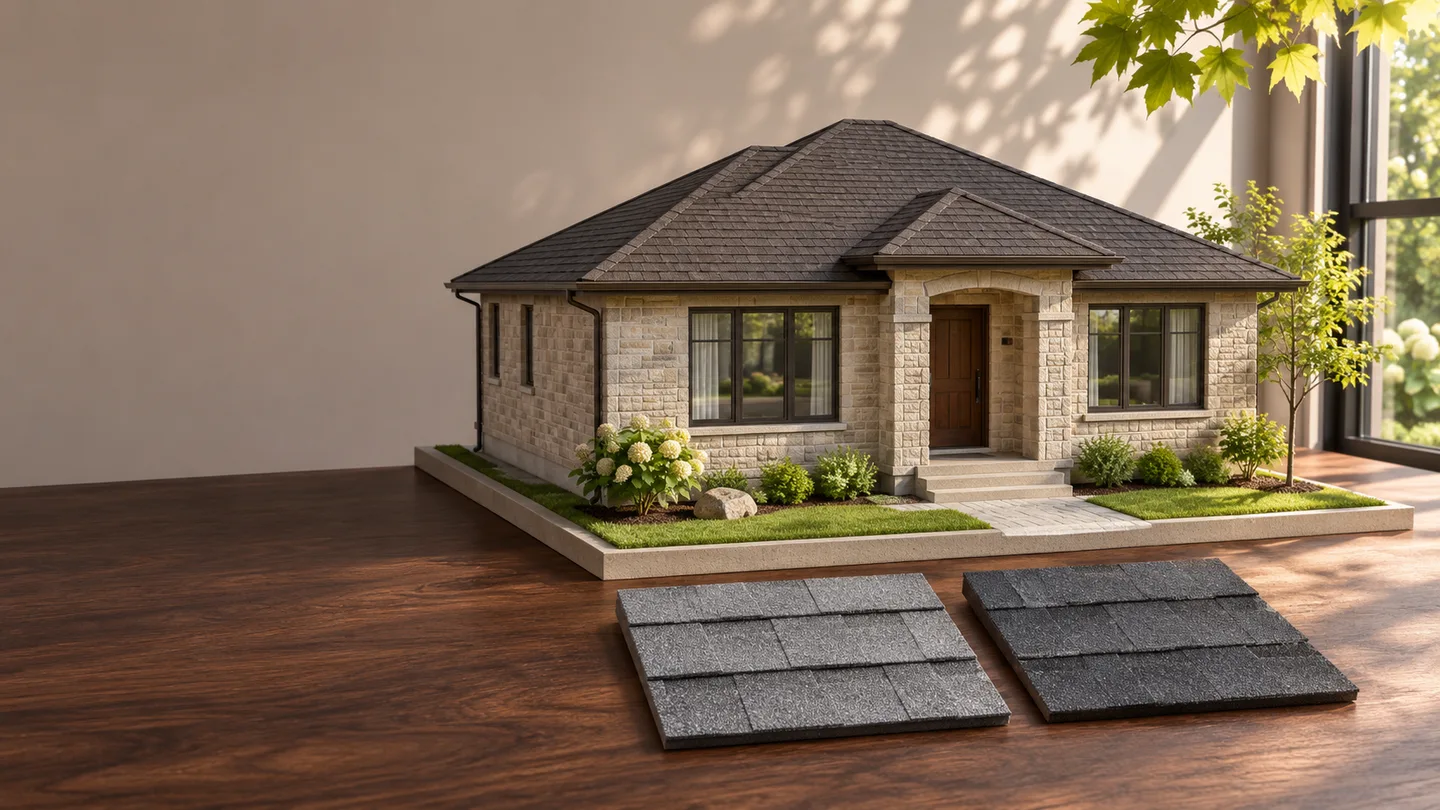
A roof sample can look different on a large plane than on a screen. Compare it with the actual exterior and daylight, then check product performance and any applicable approval before ordering.
1. Climate and product performance
Reflectance and annual energy performance depend on the actual product and building, not color alone. EPA describes both cooling benefits and possible cold-climate heating penalties. Dark roofing should not be selected as an ice-dam solution.[1]
2. Coordinate the exterior
Compare the roof with siding, masonry, trim and fixed features. Look at the large visible planes together rather than matching one small sample in isolation.
3. Respect the architecture
Profile, texture and the roof’s geometry affect how color is perceived. Replacing a covering is different from redesigning the roof shape or framing.
4. Decide how much contrast is wanted
A bold contrast and a quieter palette can both be deliberate choices. View examples relevant to the building without treating an unrelated property as a guarantee of the result.
5. Check applicable restrictions
Ask about any project, neighborhood or approval conditions before ordering. Confirm the actual requirements rather than assuming a color is universally permitted.
6. Check the actual product range
Verify which product, finish and compatible accessories are available. A general guide does not establish a provider’s inventory or installation specialty.
7. View real samples
Ask for physical samples and view them against the house in different light. Photographs and screens can help narrow options but cannot substitute for seeing the material.
Related information
References
General homeowner information, not a property-specific assessment. Requirements and product instructions vary. Leave roof access, diagnosis and hazardous work to qualified professionals.