On this pageShow contentsHide contents
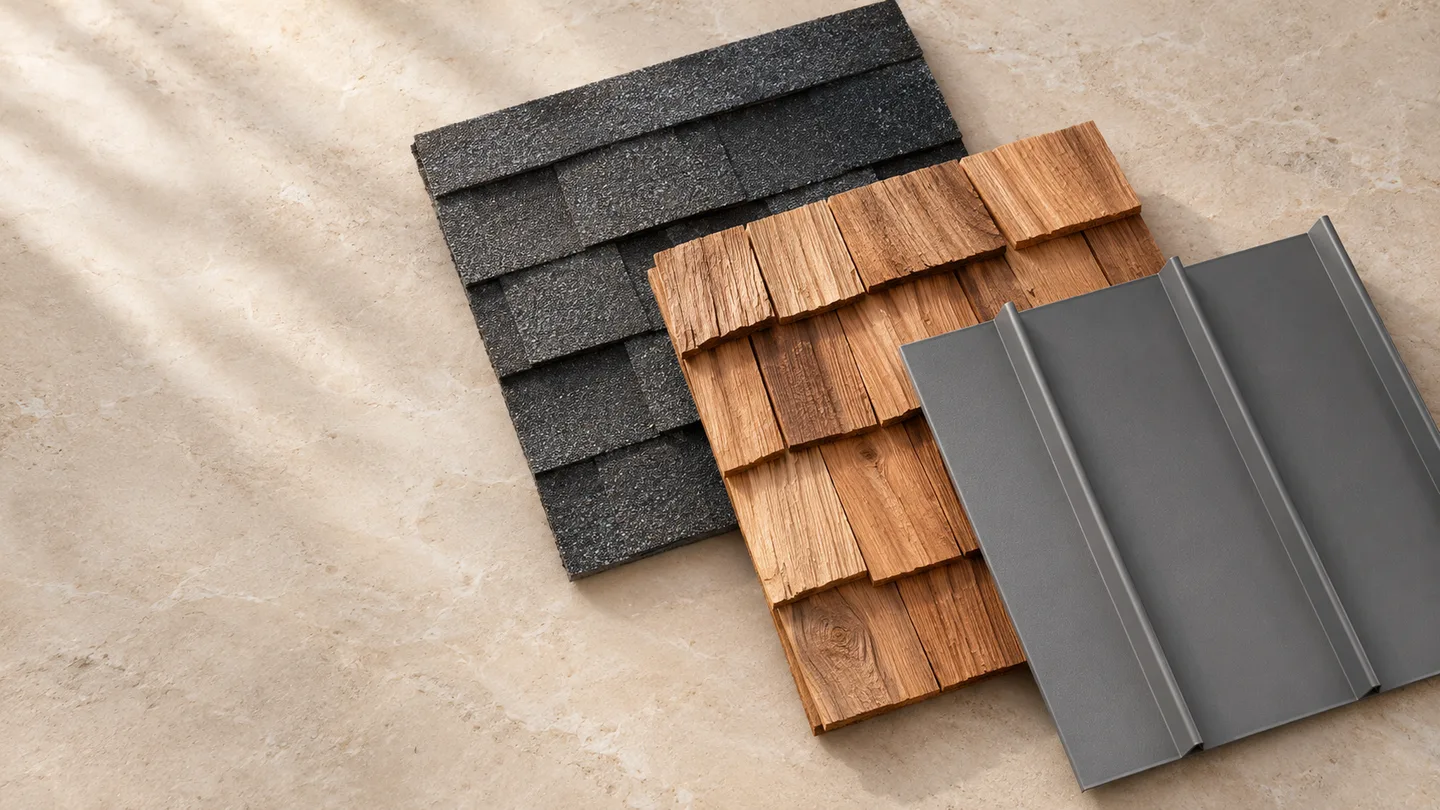
Asphalt shingles, metal products and wood shingles or shakes can create very different roofs. There is no universal winner: the actual product, roof slope, support, exposure, fire requirements and maintenance obligations matter. Use this three-option comparison to prepare a more focused conversation, then consult the Layton Roofers information for related questions.[1]
Three roofing options and their practical differences
| Option | What to compare | Important boundary |
|---|---|---|
| Asphalt shingles | Strip versus dimensional/luxury appearance, named product features and the complete replacement assembly. | Category names do not establish impact, reflective or warranty performance. |
| Metal | Material/finish, panel profile, seams, attachment and movement. | One metal name is not a tested roof-system specification. |
| Wood shingles or shakes | Manufacture, grade, treatment, drying and maintenance needs. | Suitability and fire classification depend on the product/assembly and applicable restrictions. |
The table separates product choices from project approval. It is not a stock list, local price ranking or declaration that every house can use every option.[2][3][4]
Asphalt Shingles
Asphalt shingles typically combine a reinforcing base with asphalt and protective mineral granules. Product construction and appearance vary. CertainTeed distinguishes flat, single-layer strip shingles from multilayer dimensional products; luxury products offer particular profiles and appearance.[2]
Ask which features the selected product actually carries and how it is installed with underlayment, roof edges, flashings and ventilation. Choosing the word “architectural” does not by itself establish a particular impact rating, reflective value or workmanship warranty.[2]
Metal Roofing
A metal proposal has at least two decisions: the material and the panel/attachment system. Copper, aluminum, coated steel and architectural zinc have different weathering, coating and compatibility considerations. A standing-seam system is not simply an exposed-fastener roof with its screws hidden; the movement and attachment details need comparison.[5][3]
Roof geometry, penetrations, compatible adjoining materials and safe snow-release planning belong in the installed scope. Re-covering an existing roof also requires assessment of existing layers, condition and applicable product requirements.[1][6]
Wood Shingles and Shakes
Wood shingles and shakes are not distinguished solely by a rustic look. The USDA Forest Products Laboratory report describes manufacture, grain, grade and thickness differences, including tapersawn shakes. The selected product's treatment, installation and drying conditions matter.[4]
Wood roofing needs covering-appropriate maintenance. Debris and moss can retain moisture; finishes intended for another use should not automatically be applied to a roof. The USDA report cautions against film-forming roof finishes that trap moisture. Roof access and any cleaning method need qualified, product-appropriate planning.[4]
Verify local restrictions and the actual tested assembly before choosing wood. A broad material label cannot establish a universal fire rating or approval for a particular property.
Use the same project assumptions
- Confirm removal, deck condition and treatment of concealed repairs.
- Compare the named covering, underlayment, flashing and drainage details.
- Identify product care, finish and repair limitations.
- Separate product coverage from workmanship obligations.
- Assign solar, skylight or other specialist work rather than assuming it is included.
For a larger shortlist, use the material comparison guide. For a project discussion, request a quote with the material you have and the changes you are considering. Explore related roofing guidance or return to Layton Roofers home.
References
General homeowner information, not a property-specific assessment. Requirements and product instructions vary. Leave roof access, diagnosis and hazardous work to qualified professionals.