On this pageShow contentsHide contents
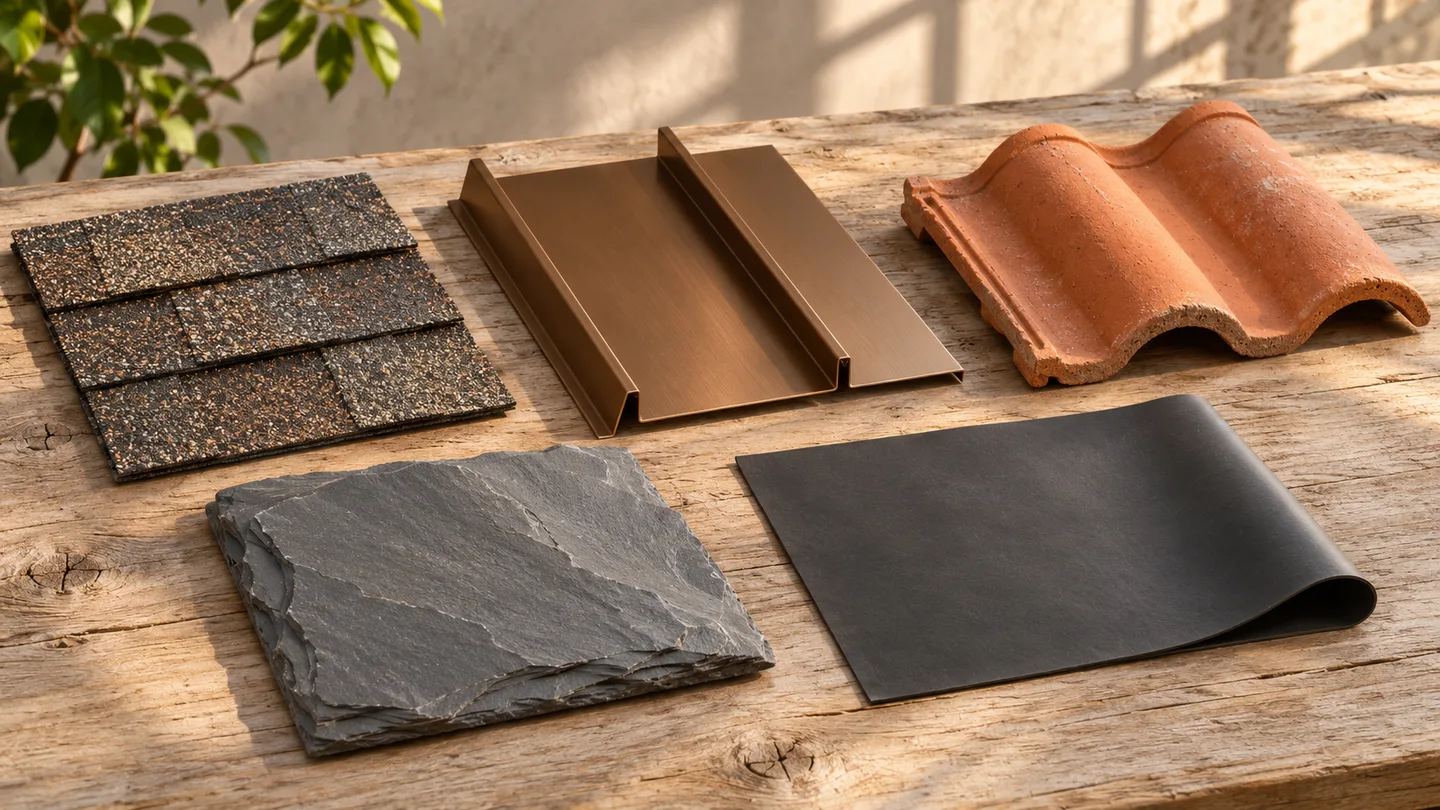
No roof material is guaranteed to stay dry under every condition. These five common material and system choices need suitable design, product selection, installation and maintenance.
1. Asphalt shingles
Compare the specific strip, dimensional or luxury product, not a material-wide guarantee. Installation, underlayment, roof edges and flashing still matter. Ask about matching and the actual product and workmanship terms.[1][2]
2. Metal roofing
Standing-seam and exposed-fastener systems have different attachment and maintenance details. Account for movement, penetrations, compatible materials and snow release rather than assuming every metal system behaves alike.[3][4]
3. Tile roofing
Assess the proposed weight, structure, underlayment and repair access. Eagle’s concrete-tile guidance identifies structural assessment as a project-specific question; a tile’s appearance does not establish that every house can support it.[5]
4. Slate roofing
Natural slate needs suitable support and specialist detailing and repair knowledge. A long-lived example on another building is not a guarantee for the proposed assembly. Compare the actual specification and the company’s relevant experience.
5. Low-slope roof systems
Low-slope describes roof geometry, not one material. Drainage, membrane or other compatible covering, penetrations and occupied-building conditions govern the system. An ordinary low-slope roof is not automatically a deck or storage area.
Questions homeowners ask
What is the best type for a house?
Start with slope, support, drainage, maintenance and budget, then compare named products and complete installed scope.[6]
How often should a roof be checked?
NRCA suggests biannual checks; professional assessment scope also depends on condition, symptoms and product guidance. Keep observations safe.[6]
Can new roofing go over the old roof?
Re-cover suitability depends on existing layers, condition, project requirements and manufacturer instructions. It is not an automatic option.[6]
How long will a roof last?
Design, product suitability, application, exposure and maintenance influence service life. Warranty length is not a universal lifespan prediction.[6][2]
What should a roofing proposal explain?
The proposed covering, components, removal, flashing, ventilation, installation, responsibility for damage, payment and written coverage.[6]
Related information
References
General homeowner information, not a property-specific assessment. Requirements and product instructions vary. Leave roof access, diagnosis and hazardous work to qualified professionals.