On this pageShow contentsHide contents
Winter preparation starts before unsafe access becomes the problem. Review known defects, drainage, roof penetrations and the attic assembly, and arrange qualified work rather than treating snow or ice removal as a routine homeowner chore.
1. Clean Your Gutters
Observe overflow and discharge from safe ground and arrange appropriate elevated maintenance. Open gutters help runoff leave the roof edge, but they do not correct heat transfer or guarantee that ice dams cannot form.[1]
2. Inspect for Damage
Before winter, review known repairs and symptoms. Observe missing or displaced covering only from safe positions and arrange assessment where needed; do not climb onto the roof to complete the checklist.[2]
3. Trim Overhanging Branches
Have hazardous limbs, roof contact and clearance assessed by an appropriate tree professional. Do not undertake difficult pruning above the house or from an icy roof.
4. Check Attic Insulation
Review insulation together with air leakage and the intended assembly. DOE describes air sealing, adequate insulation and appropriate ventilation as combined measures to reduce heat transfer that contributes to ice dams. Insulation alone is not a promise of a uniform roof temperature or a complete cure.[1]
5. Ventilation is Key
Assess air leakage, insulation, moisture and the design of a vented or unvented assembly together. Soffit and ridge vents are not a universal prescription.[1]
6. Leave snow assessment and removal to qualified help
Do not walk an icy roof, use sharp tools or improvise a removal method. Obtain qualified assessment where snow or structural concerns arise; keep clear of falling ice and snow-release areas.[2][3]
7. Ice Dam Prevention
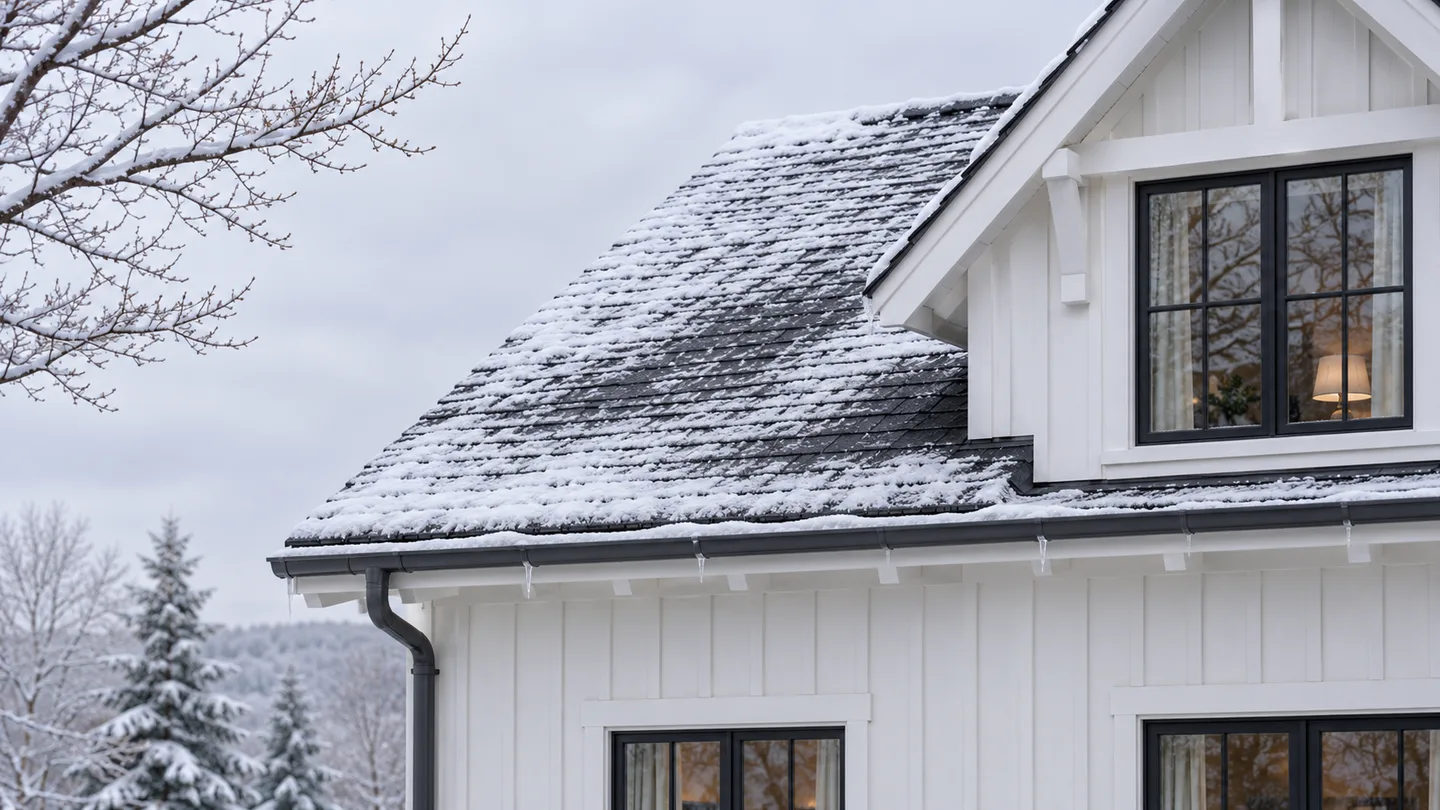
Snow can melt over warmer roof areas and refreeze at colder eaves. An appropriate eave membrane can reduce water-intrusion risk but does not prevent the heat-driven melt-and-refreeze process.[1]
8. Professional Maintenance
Review the actual product guidance, visible defects, earlier repairs and symptoms. Ask which tasks are appropriate, what access is safe and whether the problem needs roofing, insulation, air-sealing or another specialist scope.[2][1]
Separate winter preparation from hazardous access
Use repair history, safe observations and qualified assessment to plan work before access becomes difficult. An eave membrane addresses water intrusion risk, not the heat flow that creates an ice dam.[1]
- Review air sealing, insulation and the appropriate ventilation strategy.
- Identify drainage and existing defects.
- Confirm actual help and scope rather than assuming emergency availability.
Related information
References
General homeowner information, not a property-specific assessment. Requirements and product instructions vary. Leave roof access, diagnosis and hazardous work to qualified professionals.