On this pageShow contentsHide contents
Dos for Proper Roofing Maintenance
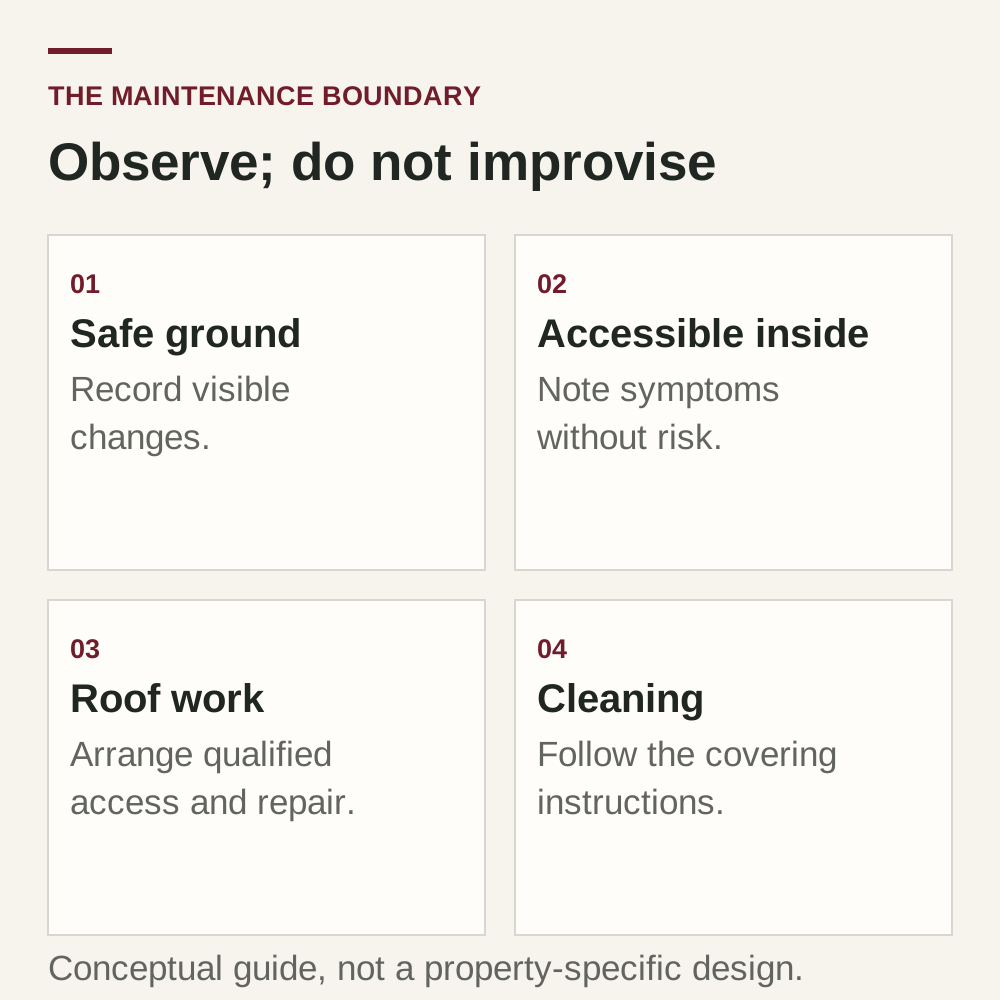
Roof maintenance works best when observations lead to the right next step. The dos and don’ts below distinguish sensible monitoring from assumptions, neglected defects and hazardous repair attempts.
1. Schedule Regular Roof Inspections
NRCA suggests biannual checks. Use safe observations, known condition and symptoms to decide the scope of professional assessment; do not treat a set paid-inspection schedule as universal.[1]
2. Keep Gutters Clean and Clear
From safe ground, record overflow, loose components and discharge concerns. Arrange elevated cleaning and repair with appropriately equipped help. Unobstructed gutters help runoff at the edge but do not establish that every roof-water problem is solved.
3. Trim Surrounding Trees
Record roof contact or hazardous limbs from a safe position and ask an appropriate tree professional about clearance. A maintenance checklist is not a method for pruning above the house or walking the roof.
4. Address Roof Leaks Promptly
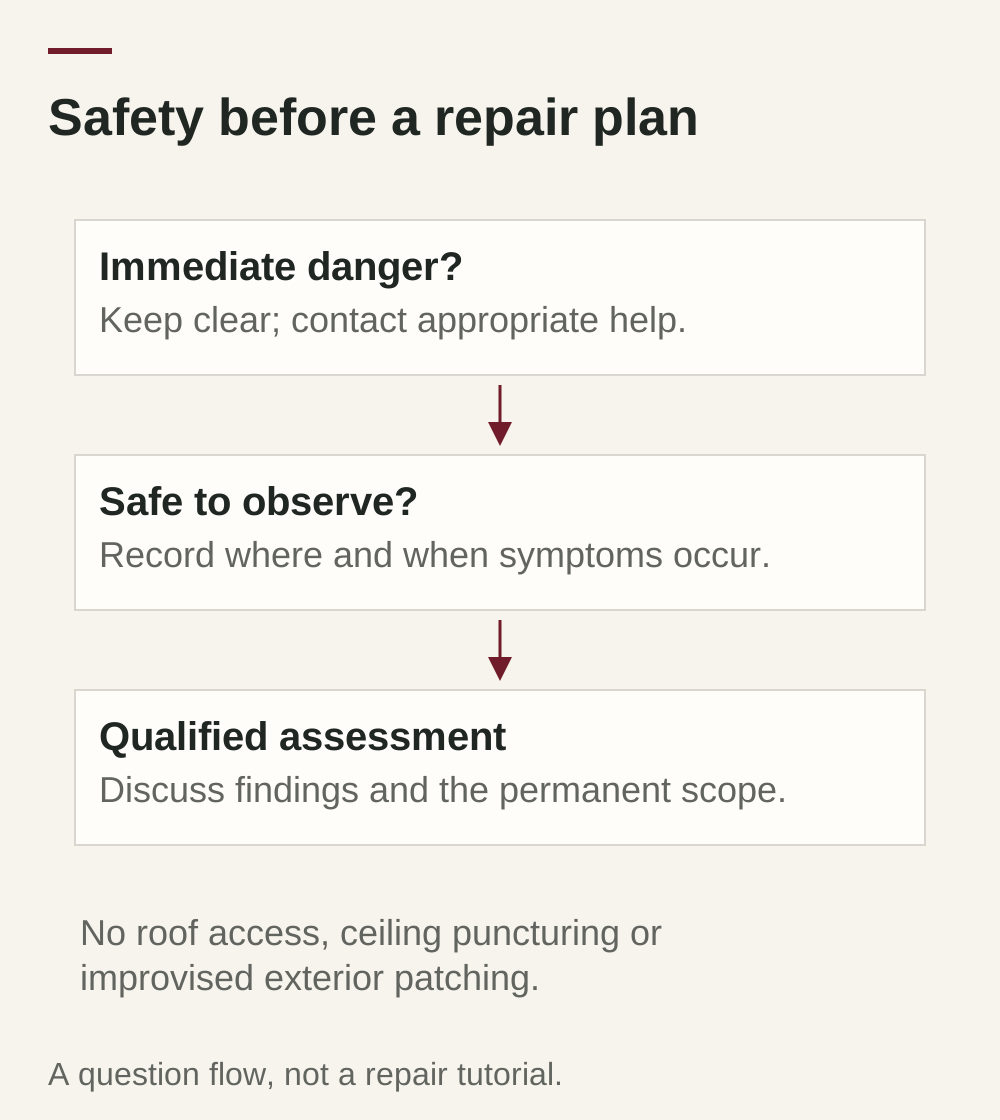
Record where and when water appears and obtain an appropriate assessment. Keep people clear of damaged ceilings and electrical hazards; a leak source is not necessarily directly above the stain.
5. Ensure Proper Ventilation
Assess moisture sources, air leakage, insulation and the intended vented or unvented assembly together. Adding vents is not a universal cure for condensation, ice dams or energy use.[2]
Don’ts to Avoid for a Healthy Roof
In addition to following the dos of proper roofing maintenance, it’s equally important to be aware of the don’ts. By avoiding these common mistakes, you can protect your roof from unnecessary damage and extend its lifespan:
1. Don’t Ignore Signs of Damage
Ignoring signs of roof damage, such as loose or missing shingles, cracked tiles, or leaks, can lead to more significant issues down the line. It’s essential to address any problems promptly to prevent further damage and costly repairs.
2. Don’t Neglect Regular Maintenance
Keep a condition record and arrange appropriate work for actual findings. Elevated cleaning and repairs are not routine homeowner tasks, and maintenance does not guarantee every future problem is prevented.[1]
3. Don’t cover up an unexplained leak
A surface patch or sealant is not a substitute for finding the water path and integrating the repair with adjacent layers. Ask what caused the symptom before choosing the method.[3]
4. Don’t Overlook Proper Insulation
Review air leakage, insulation, moisture sources and the intended roof assembly together. Insulation alone does not establish a complete solution to condensation or ice dams.[4]
5. Don’t DIY Complex Roof Repairs
Most roof work should not be DIY. Leave roof access, repairs and unclear diagnosis to qualified help rather than using apparent complexity or comfort as the threshold.[1]
Frequently Asked Questions (FAQ)
How often should I inspect my roof?
Use the actual roof’s condition, symptoms and product guidance to plan professional assessment. NRCA’s biannual-check guidance is not a universal obligation to purchase two professional inspections.[1]
Can I perform roofing repairs myself?
Most roof work should not be DIY. A small defect, confidence or household-repair experience does not establish safe access or a sound method. Arrange qualified assessment and repair.[1]
What are the signs of a damaged roof?
Signs of a damaged roof include missing or cracked shingles, leaks or water stains, sagging areas, and excessive granule loss. If you notice any of these signs, it’s crucial to address the issue promptly.
How long does a roof typically last?
Design, product suitability, application, exposure and upkeep influence service life. A material-wide year range does not establish the remaining condition of a particular roof or its warranty remedy.[1][5]
What should I do in case of a roof leak?
Protect belongings or contain drips only where it is safe to do so. Stay away from damaged ceilings and wet electrical equipment, and arrange professional exterior temporary protection rather than climbing to tarp the roof.
Use the checklist to plan appropriate work
Use observations to request the right diagnosis and a written scope. Roof access, repairs, cleaning and unclear causes need qualified help; maintenance does not promise that every future issue is prevented.[1]
Related information
References
General homeowner information, not a property-specific assessment. Requirements and product instructions vary. Leave roof access, diagnosis and hazardous work to qualified professionals.