
On this pageShow contentsHide contents
The visible covering is only part of a roof. Understanding the deck, underlayment, flashing, drainage and attic assembly makes a repair or replacement proposal easier to read and compare.
What Is Roofing?
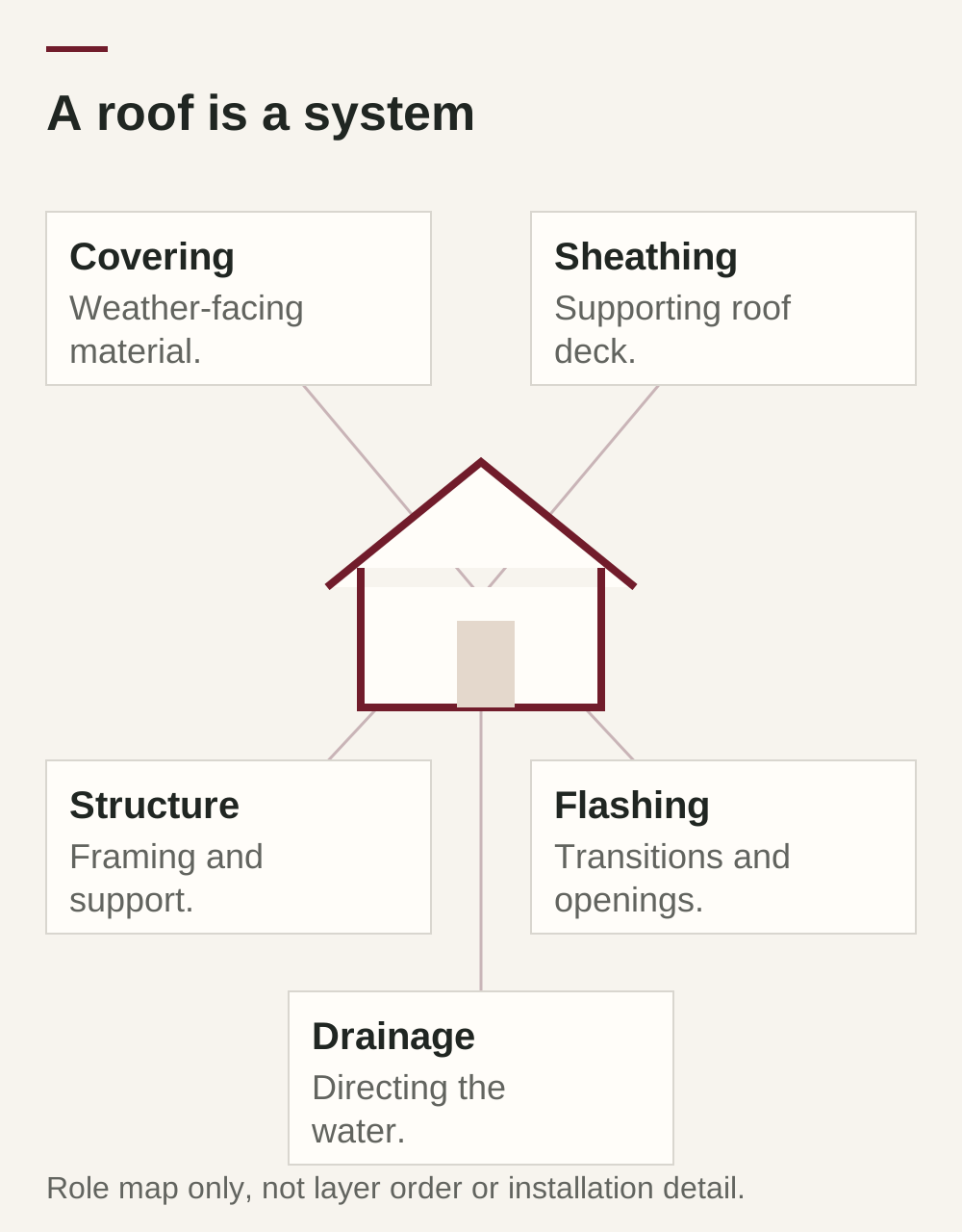
A roof combines structural support and a weather-management assembly. Framing carries loads; the deck or sheathing provides the supporting surface for the specified roofing. The covering, underlayment and transition details have different jobs, so replacing the visible material is not automatically replacing the whole system.[1]
- Deck and framing
- The deck is the surface beneath the roofing, while rafters/trusses or other framing support it. Visible covering damage alone cannot establish structural capacity.
- Underlayment and covering
- For asphalt-shingle roofs, ARMA describes underlayment as secondary water-resistant protection used with the shingles. The specified covering sheds weather above it; neither name establishes the complete installation details.[1]
- Flashing and drainage
- Flashings connect transitions such as roof-to-wall intersections and penetrations to adjacent water-management layers. Gutters receive runoff downstream; a gutter cannot repair every failed flashing detail.[2]
Types of Roofing Materials
Compare the covering with the rest of the assembly: deck, underlayment, flashing, attachments and maintenance. Conventional solar panels are equipment above a roof, not a substitute for its weatherproof covering.[3][4]
Roof Design and Structure
Gable, hip and low-slope forms create different planes and water paths. Changing framing, geometry or occupied use is a different task from renewing a covering. Structural concerns require the appropriate evaluation.
The attic/enclosure arrangement also matters. A vented attic commonly locates air/thermal control at the ceiling; an unvented assembly places it at the roofline. Insulation and the air barrier need coordinated continuity, not an automatic order for more vents.[5]
Common Roofing Problems
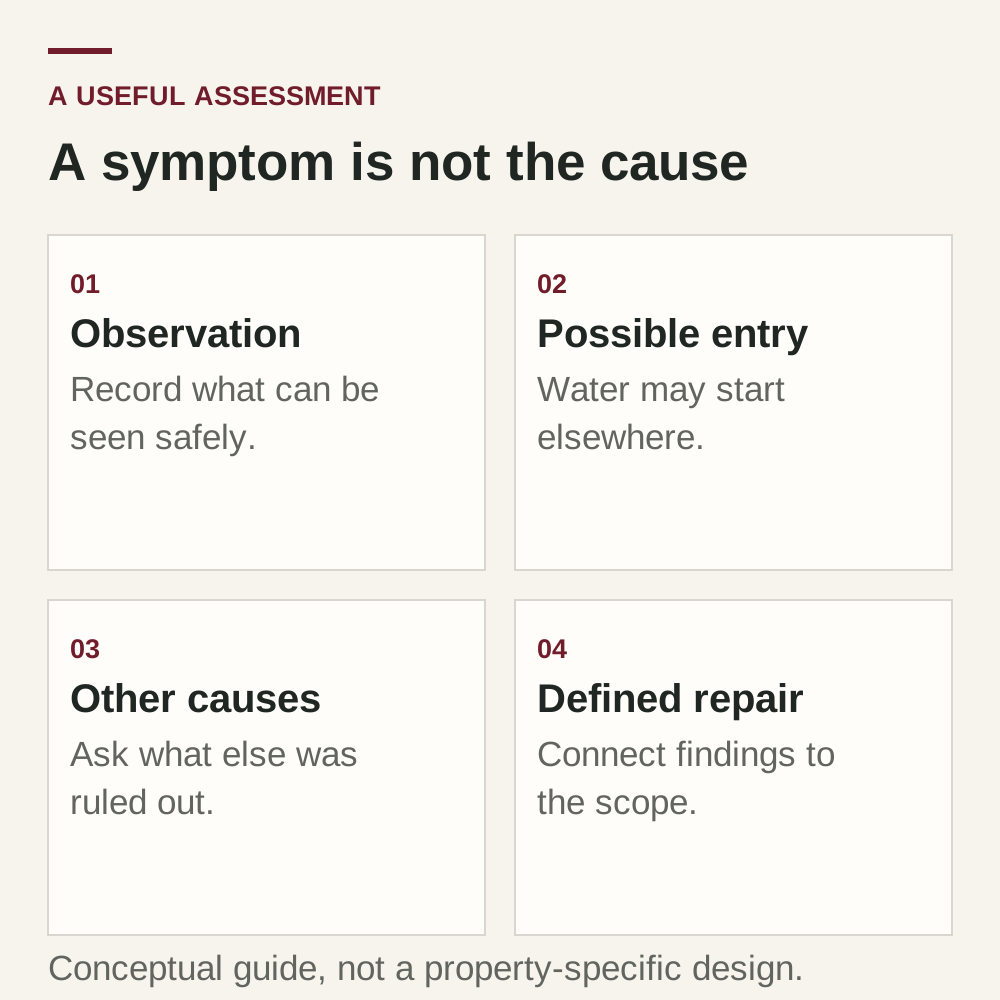
A leak, displaced covering or sagging area needs cause-specific assessment. Observe safely, record location and timing, and keep people clear of structural or ceiling hazards. A stain alone does not identify the entry point.
Frequently Asked Questions
1. How often should I inspect my roof?
NRCA suggests biannual roof checks. Keep homeowner observations safe and use condition, symptoms and product guidance to agree the scope of professional assessment.[3]
2. Can I install a new roof over my old one?
Re-covering is conditional. Existing layers, deck condition, weight, applicable requirements and the proposed product's instructions must be assessed. It is not automatically prohibited, suitable or equivalent to removing the old system and evaluating what lies below.[3]
3. How long does a typical roof last?
Design, product suitability, application, exposure and upkeep affect service life. Compare the condition of the whole assembly rather than assigning every asphalt or metal roof a fixed age.[3]
4. What are the signs of a roof leak?
Look out for water stains on your ceiling, peeling paint, or damp spots in your attic. These can be indicators of a roof leak.
5. Is roof maintenance necessary?
Maintenance can record changes and support timely work, but it does not guarantee a lifespan extension or prevent every repair. Follow the actual system’s care guidance and keep roof access and repairs with qualified help.[3]
Read the proposal as a roof system
A useful agreement identifies the covering, preparation, components and transition details. Ask where the diagnosis ends and a separate trade or design assessment begins.[3]
- Check removal, flashing, ventilation and installation details.
- Record exclusions and concealed-work approval.
- Read payment, protection and warranty terms.
Related information
References
General homeowner information, not a property-specific assessment. Requirements and product instructions vary. Leave roof access, diagnosis and hazardous work to qualified professionals.