On this pageShow contentsHide contents
A reflective roof, a planted roof and a solar installation do different jobs. Compare the actual assembly, structural needs and maintenance before grouping them together as green roofing. The environmental benefit needs to fit the building, not just the brochure.
The Benefits of Green Roofing
A vegetated or living roof is one specific assembly. “Sustainable roofing” is broader and can refer to other choices, such as reflective products or solar equipment. Vegetation-specific benefits should not be applied to every option.[1]
1. Energy Efficiency
A designed vegetated roof can shade its underlying surface and affect heat flow. EPA describes potential energy benefits, but the result depends on design, climate and building conditions. That does not mean every product marketed as green reduces heating and cooling bills.[1]
2. Stormwater Management
Vegetated roofs can retain rainwater and affect stormwater runoff. The result depends on the design and conditions; it is not a flood-prevention guarantee for every property. EPA describes this as a green-roof benefit, not a property of all sustainable roofing.[1]
3. Improved Air Quality
EPA describes potential air-quality and environmental benefits of vegetated roofs. These are design- and context-dependent effects, not proof of a health improvement in a particular home.[1]
4. Longevity
Vegetation can shield an underlying membrane from exposure in a properly designed living-roof assembly. Its waterproofing, drainage and maintenance still need attention. This potential assembly-specific benefit is not a promise that recycled metal, reflective shingles or every sustainable product lasts longer.[1]
Types of Green Roofing
1. Vegetative Roof
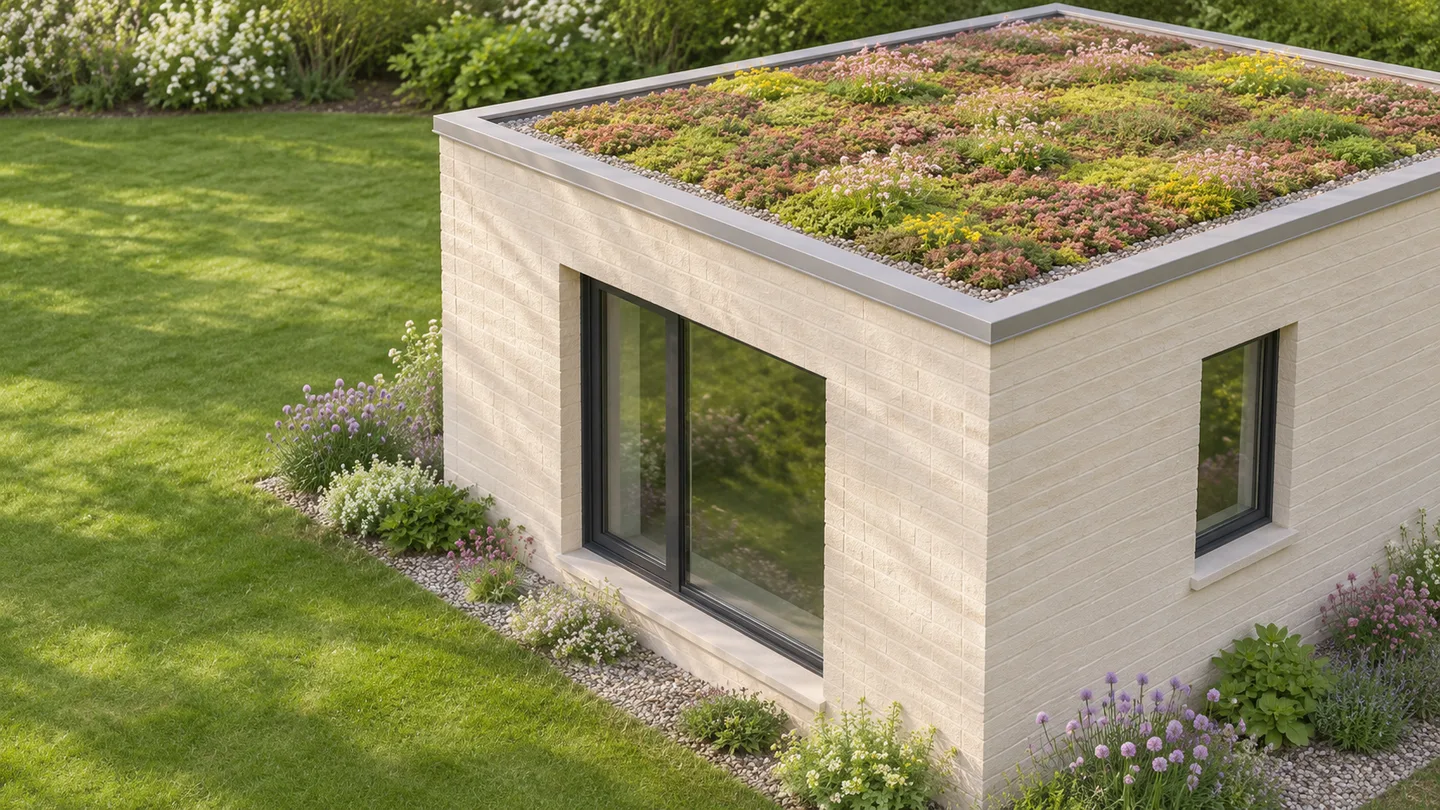
Vegetative roofs feature a layer of vegetation, such as grass, plants, or even trees, growing on a specially designed substrate. These roofs can be extensive (with lighter vegetation) or intensive (with a wider variety of plants). They require additional structural support and regular maintenance.
2. Solar Roof
Conventional roof-mounted panels generate electricity above a separate weatherproof covering. Building-integrated solar roofing is a different product category. Assess roof condition, attachments, shading, electrical work and future equipment removal.[2]
3. Cool Roof
A reflective surface reduces absorbed solar heat. Compare annual heating and cooling effects for the building; EPA notes possible winter heating demand in cold climates. A reflective finish is not the same thing as insulation or solar generation.[3]
4. Recycled or Sustainable Roofing Materials
Ask what recycled content or reuse route the named product actually has, and whether local recovery is available at removal. Recycled content, end-of-life recyclability and the home's operating energy use are different questions. A material label alone does not answer all three.
Choose a goal and check the assembly
Separate reflective products, solar equipment, vegetated roofs and recycled-content choices. Ask which benefit applies to the actual system and who maintains it.[3]
- Check support, waterproofing and drainage where relevant.
- Evaluate annual heating and cooling effects.
- Compare installed scope and ongoing care, not a blanket sustainability promise.
References
General homeowner information, not a property-specific assessment. Requirements and product instructions vary. Leave roof access, diagnosis and hazardous work to qualified professionals.